Understanding Deer Bedding Areas on Small Acreage
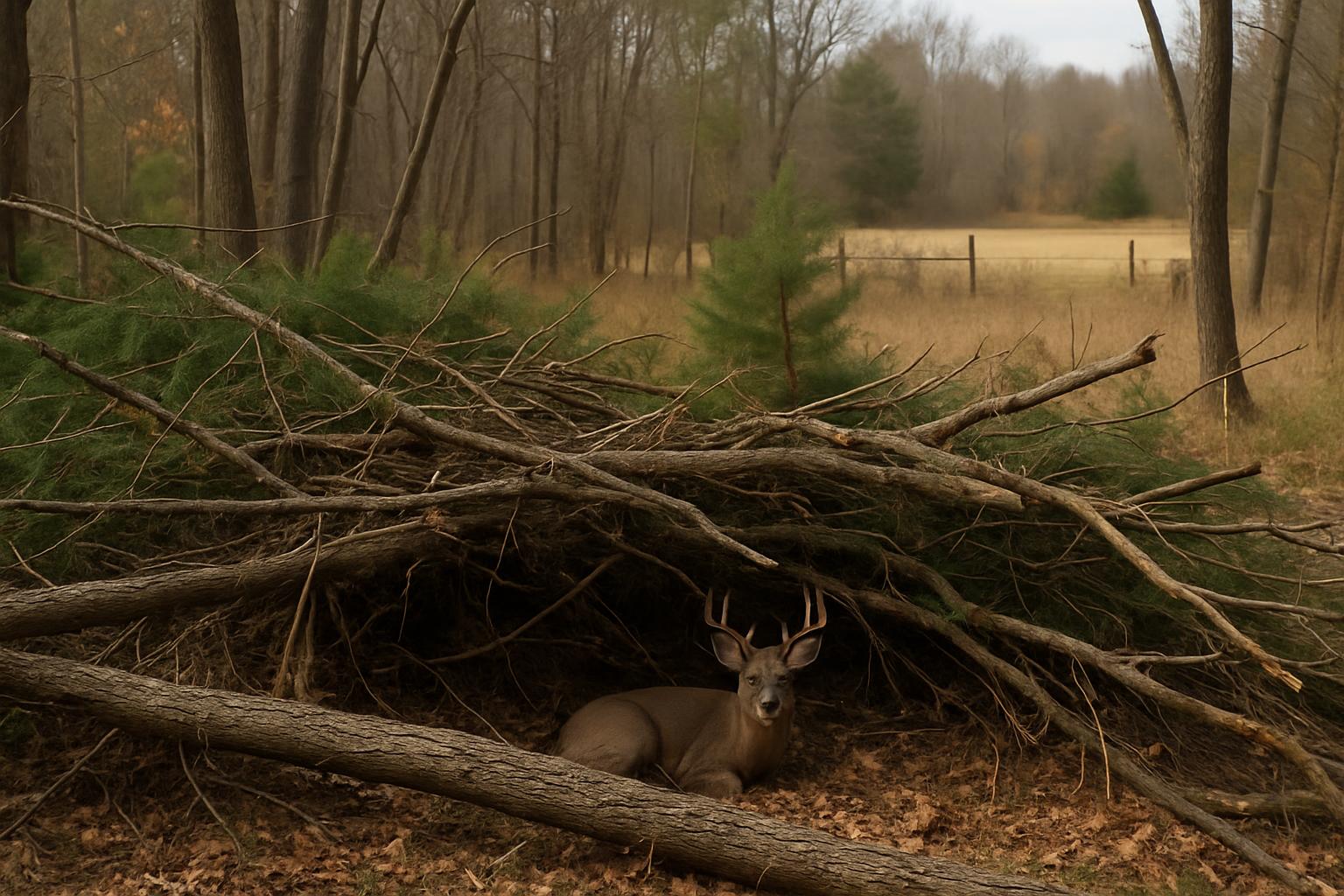
Deer spend roughly 60 to 70 percent of their time bedded. That's not laziness — it's energy conservation, digestion, and predator avoidance all at once. A deer bed is a carefully chosen location that meets a specific set of needs: thermal protection, security cover, sight lines or wind advantage, and proximity to food and water.
On large acreage, deer have enough room to find all of these things naturally. On small properties — five to fifty acres — the calculus is different. If your land doesn't offer quality bedding cover, deer will use you as a travel corridor and bed somewhere else. If it does, you become the anchor point for the local population and the focal point for hunting pressure on that deer.
Understanding what makes a good bed, where to find existing ones, and how to build new ones is one of the highest-leverage things a small acreage landowner can do.
How Deer Choose a Bed
Deer are not random about where they lie down. Every bedding decision balances a few competing priorities:
Security cover. A deer at rest is a deer at risk. Thick overhead cover — dense shrubs, tall grass, conifer branches — breaks up the deer's outline and creates visual concealment from above and the sides. On most properties, the thickest cover gets used as bedding first.
Wind and scent advantage. Deer bed into the wind or at angles where thermals carry scent toward approaching danger. In hilly terrain, deer often bed just below a ridgeline on the downwind side, where rising thermals in the morning carry human scent up and away. In flat country, they position themselves so prevailing winds hit their nose before any likely approach route.
Thermal protection. Bedding sites that provide warmth in cold weather and shade in summer see more consistent use across seasons. South-facing slopes warm earlier in winter mornings. Dense conifers block wind and hold heat. In summer, north-facing slopes stay cooler and are preferred during midday heat.
Escape routes. A deer in a bed that it can exit only by running directly through danger will vacate that spot after one scare. Good bedding areas have at least one, usually two, clean escape routes — often through the thickest adjacent cover. Deer remember where they can run.
Proximity to food and water. Deer get up to feed and drink. A bed within 200 to 400 yards of a reliable food source and reasonably close to water means the deer expends less energy and takes less risk during the vulnerable transition from bed to feed. Installing reliable on-property water — as outlined in How to Build a Small Wildlife Pond on Rural Property — can anchor deer movement to a specific area and make bedding site selection much more predictable.
Reading Your Property for Existing Beds
Before you plant or cut anything, spend a morning walking your property in the off-season looking for where deer are already bedding. You'll find evidence if you know what to look for.
Oval depressions in leaf litter or grass. A fresh deer bed leaves a body-shaped oval compressed into the ground surface. In dry leaf litter, the depression holds its shape for days. In tall grass, it stays flattened for a week or more. Multiple depressions in the same area indicate a preferred site.
Compressed vegetation with hair. Coarse brown or gray deer hair catches on the edges of a bed, especially in brushy areas. Finding hair in a well-worn depression confirms the bed was used recently.
Concentrated sign near dense cover. Scrapes, rubs, and heavy trail traffic that converge on a thick patch of cover typically indicate that patch is bedding habitat. Deer don't put social signage far from where they spend most of their time.
Scat. Deer often defecate when they rise from a bed. Concentrated scat piles on the edges of thick cover, especially consistent piles in the same general area across multiple visits, point to a nearby bed.
Map what you find. Note the aspect (which direction the bed faces), the overhead cover type, wind direction at the time, and any nearby food sources. Patterns emerge quickly and tell you where deer feel safe on your specific property.
Why Small Acreage Bedding Matters More Than It Seems
On a 200-acre property, a landowner can afford mediocre bedding cover in one corner because deer have options everywhere else. On a 20-acre property, every cover type you create or destroy changes how deer use the entire parcel.
Small properties with no bedding cover become travel corridors — deer move through during low-light hours but don't linger. This means fewer daylight sightings, less predictable patterns, and less hunting opportunity. It also means the property does nothing to hold deer during the season when neighboring hunters push deer around.
A single half-acre thicket of the right structure can change all of that. Deer that find a reliable bed on your property will return to it day after day, building patterns you can hunt around. Doe groups that establish bedding on your land become the nucleus of the local population. Mature bucks gravitate toward does during the rut — and toward thick, undisturbed cover throughout the year.
The return on investment for bedding improvements is disproportionately high on small acreage precisely because you're influencing a higher percentage of the deer's core area with each improvement.
Improving Existing Bedding Cover
If your property already has areas deer are using for beds, the first task is to protect and improve them, not rebuild from scratch.
Reduce entry pressure. The single most important improvement you can make to an existing bedding area is to stop walking through it. Human scent in a bedding area is the fastest way to push deer to neighboring properties. Route your access trails around bedding areas, not through them. If a trail does pass near a bed, consider relocating it or abandoning it entirely.
Add structure at the edges. Deer beds at the edge of cover need a wall behind them and open space in front for scent detection. Dropping or hinge-cutting a few trees along the outside edge of an existing thicket creates instant horizontal cover — tops fall and stay green for one to two growing seasons before dying back, giving deer a dense tangle of branches at shoulder height. This is one of the fastest ways to improve the quality of an existing bedding area.
Create staging areas. Adjacent to every good bedding area, there's an opportunity to create a staging area — a transition zone where deer hang before moving to food in the evening. Dense edge cover, a few fruit-bearing shrubs, and minimal human entry lets deer feel secure as daylight fades. Staging areas also give you stand sites close enough to bedding to catch deer on their feet in shootable light.
Manage invasives. Multiflora rose, autumn olive, and Japanese honeysuckle — common invasives across much of the whitetail range — can either help or hurt a bedding area depending on density and context. Light to moderate cover of thorny invasives increases security. Solid monoculture stands replace more diverse, layered cover that deer prefer. Selectively cut or treat invasives to break up solid blocks while retaining pockets of dense thorny cover around the edges.
Creating Bedding Cover from Scratch
On properties with limited natural cover, you may need to build bedding habitat from the ground up. This takes two to five years to mature but produces predictable, permanent improvements.
Hinge cutting. This is the fastest and cheapest method for creating immediate horizontal cover. Select trees six to ten inches in diameter, cut through the trunk at about knee height without going all the way through, and push the top over. The tree continues to live for one to three years while the fallen top creates a dense tangle of branches and leaves. Hinge cut in patches of a quarter acre or more, leaving vertical trees to provide overhead structure. Do this in late winter before sap rises for best survival rates. For a complete guide covering species selection, cut height, and how to lay out a full bedding block, see Hinge Cutting for Deer Habitat on Small Acreage.
Native shrub plantings. Planting dense native shrubs along field edges or in corners of a property creates permanent structure that improves with age. Hawthorns, native plums, dogwoods, and elderberry produce both cover and food. Plant in masses of at least a quarter acre — isolated shrubs don't create the concealment that deer seek in a bedding area.
Conifer plantings for thermal cover. Whitetail deer in cold climates seek thermal cover from October through March. Dense conifer stands — white spruce, Norway spruce, eastern red cedar — block wind and hold warmth. A half-acre planting of conifers adjacent to other bedding cover extends the season those beds are used and increases how long deer stay bedded in cold weather.
Native grass establishment. Tall native warm-season grasses — switchgrass in particular — create dense cover from late June through winter. A half-acre to two-acre block of switchgrass planted on a south-facing slope becomes a preferred bedding area within two growing seasons. Deer use the inner core for beds and browse the edges. In northern states, switchgrass holds its structure through winter and provides the thermal protection that other herbaceous plants lose when they fall over after frost.
Stand Placement Around Bedding Areas
Bedding areas are the organizing principle around which your stand network should be built. But hunting directly on a bedding area almost always fails — you disturb the deer when you enter or exit, and the pattern breaks down within a hunt or two.
The correct approach is to hunt the transition between bedding and feeding. Position stands 50 to 150 yards downwind of the bedding edge on the travel corridors deer use to reach food sources. Get in early before deer are up and moving, and exit after deer have returned to their beds in the morning. Wind is everything — a stand that requires walking through or across the wind to reach a bedding area will contaminate the site regularly. Designing your entry routes to follow mowed firebreak lines keeps access quiet and minimizes scent drag — How to Establish a Firebreak on Rural Property covers a layout approach that serves access, fire protection, and wildlife management at once.
During the rut, mature bucks cruise the downwind edges of doe bedding areas scent-checking without committing to entry. A stand 80 to 100 yards downwind of a known doe bedding area in the first two weeks of November catches this behavior on a near-daily basis in good deer country.
Summary
Deer bedding cover is the most underinvested habitat type on most small properties. Understanding what drives bedding site selection — security, wind advantage, thermal protection, escape routes, food proximity — lets you find where deer are already bedding and what improvements will make those sites better. Hinge cutting, native shrub plantings, conifer blocks, and switchgrass fields are the practical tools for building new cover. Protecting bedding areas from human intrusion is as important as any physical improvement. Get the bedding right on a small property and everything else — food plot use, trail camera patterns, stand selection — organizes itself around those anchor points.
Stop Seeing Deer Only at 2 AM — Get the Free 10-Point Habitat Fix
Your property has specific, fixable gaps — and most 1–50 acre hunters never find them. This free checklist pinpoints exactly what's missing and tells you what to change first so deer start showing up when you can actually hunt them.
- ✓ The food plot timing that pulls deer into daylight hours
- ✓ How to build bedding cover with just a chainsaw (no equipment needed)
- ✓ Stand placement mistakes silently blowing out your property
- ✓ The #1 pressure rule most hunters skip — and deer remember
- ✓ Low-pressure access routes most small acreage owners never plan