How to Clear Brush on Small Acreage Without Heavy Equipment
Why Brush Takes Over and Why It Matters
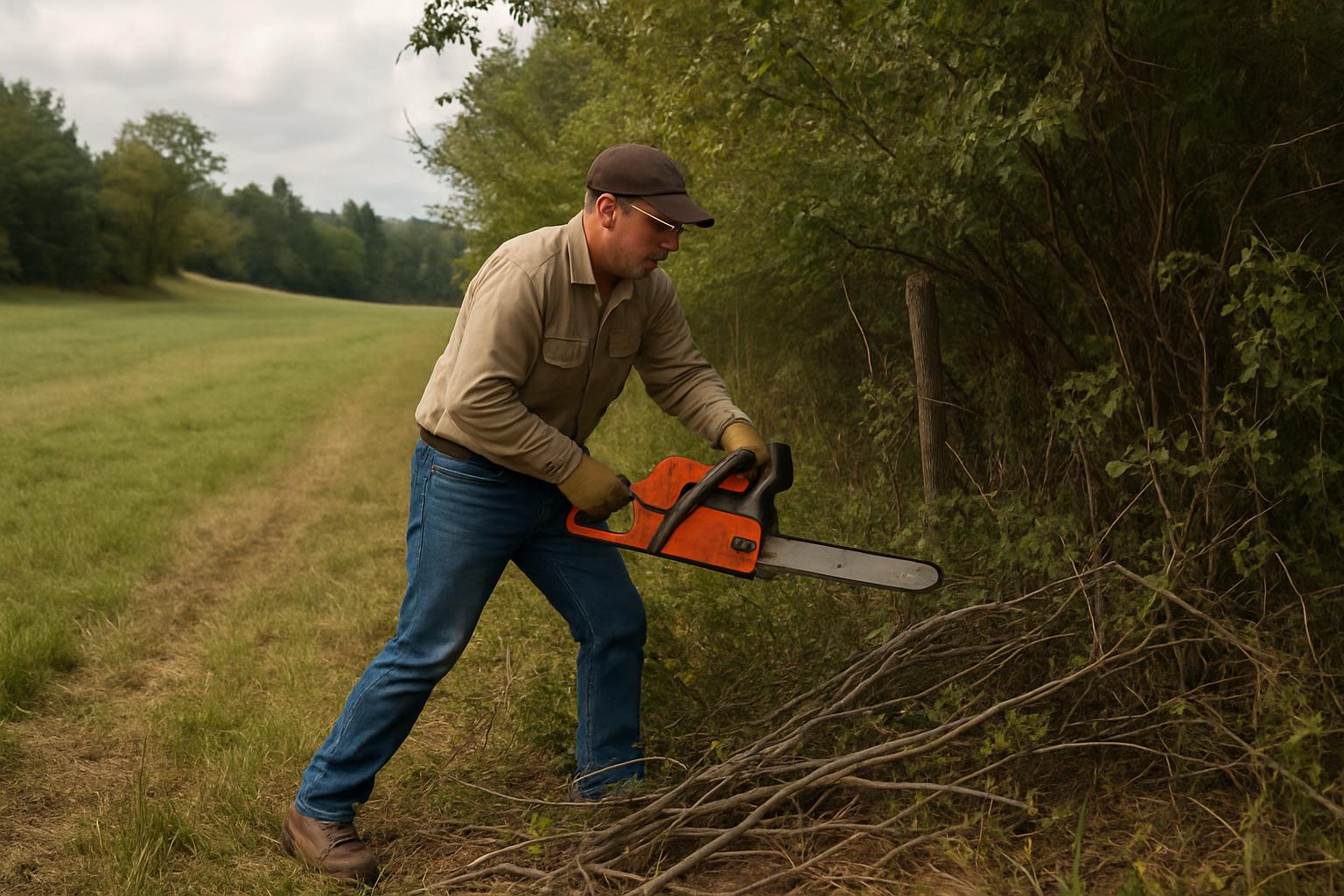
If you've walked your fence line lately and found it buried under a tangle of cedar, multiflora rose, or sumac, you're not alone. Brush encroachment happens fast on small acreage — especially in the 2 to 5 years after a property changes hands or grazing pressure drops. A single season of neglect can turn a clear pasture edge into a thicket that takes a full weekend to fight back through.
The cost isn't just cosmetic. Dense brush shades out desirable grasses, harbors ticks and rodents, undermines fence posts by trapping moisture, and makes annual mowing impossible. Getting ahead of it early — before it becomes a mature stand — is the difference between a half-day task and a multi-week project.
This guide focuses on practical brush clearing for landowners managing 1 to 20 acres without access to heavy equipment. Every method here can be executed by one or two people using a chainsaw, brush cutter, or rented walk-behind brush mower.
Step 1 — Assess the Stand Before You Start
Walk the area and categorize what you're dealing with. Brush clearing strategy depends heavily on species, density, and stem diameter.
Light brush (stems under 1 inch diameter): Invasive shrubs like multiflora rose, autumn olive, and young sumac in this size range respond well to a heavy-duty string trimmer or walk-behind brush mower. A single pass followed by a follow-up treatment in 6 weeks is usually enough to set them back significantly.
Medium brush (stems 1 to 3 inches diameter): This is the most common scenario on neglected small acreage. A brush cutter with a blade attachment or a chainsaw handles these efficiently. Figure on clearing 0.25 to 0.5 acres per hour depending on density.
Heavy brush (stems over 3 inches diameter): Dense cedar, large sumac, or mature invasive shrubs in this range require a chainsaw and a plan for disposing of the material. Don't underestimate the volume — a 10-foot cedar that looks manageable on the stump produces a pile of brush that takes 30 minutes to limb and drag out.
Before you buy fuel or sharpen blades, walk the entire area and flag problem species and large-diameter stems. This prevents surprises mid-job and helps you sequence the work logically.
Step 2 — Choose the Right Tools for the Job
You don't need to own every tool — rental yards in most rural areas stock exactly what you need for a weekend project.
Walk-behind brush mower (rent: $80–$180/day): The most efficient tool for clearing light to medium brush under 1 inch diameter across open ground. A good walk-behind mower handles 6-foot-tall brush without bogging down if you work at a steady pace. Use this first to knock down the top growth before tackling root systems.
Brush blade on a straight-shaft trimmer (own or rent: $40–$60/day): A 3-tooth or 8-tooth steel brush blade turns a standard trimmer into a capable shrub cutter for stems up to 1.5 inches. Best used where terrain or obstacles make a mower impractical. Wear full leg protection — kicked debris is the primary injury risk.
Chainsaw (16-inch bar minimum for brush work): For stems over 1.5 inches, a chainsaw is faster and safer than forcing a brush blade. A 16-inch bar is adequate for most small acreage brush. Keep a spare chain on hand — brush clearing, especially near rock or ground contact, dulls a chain quickly.
Loppers and hand pruners: Keep a pair of long-handled loppers (28-inch handles minimum) for cleanups and reaching into brush piles without repositioning a power tool. Bypass-style loppers with 2-inch cutting capacity are the most versatile option.
Step 3 — Work from the Outside In
The most common mistake in brush clearing is starting in the middle of a thicket. This creates a tangle of cut material around your feet, makes it hard to move equipment, and leaves you surrounded by brush with nowhere to drag the debris.
Instead, work the perimeter first. Walk a 10-foot strip around the outside edge of the stand and cut everything to ground level. Drag cut material out to an open area as you go. Once the perimeter is clear, work your next pass inward. This method gives you a clear exit path at all times and keeps the debris moving consistently.
For a half-acre brushy area, a two-person team using this method can clear to stumps in 6 to 8 hours. One person runs the chainsaw or brush cutter; the second person limbs, stacks, and drags brush. Switching roles every hour reduces fatigue and speeds the overall pace.
Step 4 — Handle the Root Systems
Cutting brush at ground level buys you a season or two of clear ground, but most brush species — cedar, sumac, multiflora rose, and elderberry in particular — re-sprout aggressively from the root crown. If you want lasting results without herbicide, the root has to come out or be killed.
For small landowners, the most practical no-herbicide option is cut stump treatment with a vinegar-salt paste. Apply concentrated white vinegar mixed with a tablespoon of salt directly to the cut stump surface within 60 seconds of cutting. This timing matters — the vascular tissue is still open and transports the treatment down into the root. Results vary by species; this works well on sumac and young multiflora rose, less reliably on mature cedar.
For persistent re-sprouters, basal bark treatment with a triclopyr-based herbicide is the most effective solution. Apply the mixed product to the lower 12 to 18 inches of the stem bark without cutting first. This method works any time the ground isn't frozen. Triclopyr products labeled for brush control are widely available at farm supply stores. Always read the label and observe buffer distances from water.
Mechanical removal: For stumps up to 4 inches in diameter, a stump grinder rental ($80 to $150/day) removes the root crown completely. This eliminates re-sprouting without any chemical application, but the grinding generates significant wood chips that need to be raked and spread.
Step 5 — Manage and Prevent Re-Encroachment
Cleared ground doesn't stay cleared without follow-up. The most effective approach for small acreage is to establish a mowing cycle that prevents re-establishment before any re-sprouts become established.
First summer after clearing: Mow or brush-cut any re-sprouts at the 8 to 12-week mark. At this stage, re-sprouts are still drawing on diminished root reserves and a second cutting further weakens the plant.
Ongoing annual maintenance: One or two passes per growing season over cleared areas is usually enough to keep brush from returning on actively managed ground. A 15-acre property with a 60-inch finish mower can stay on top of most cleared areas in a few hours per pass.
Improve soil conditions: Brush encroaches fastest on compacted, low-fertility ground where grasses can't compete. A soil test (your county extension office offers these for $15 to $25) will tell you what amendments are needed to establish competitive grass cover. Lime and a grass overseeding into cleared areas dramatically reduces the rate of brush re-establishment.
Key Takeaways
- Walk and categorize your brush stand before starting — stem diameter and species determine which tools and methods to use.
- Work outside-in: clear the perimeter first and drag debris as you go to keep your work area open.
- A walk-behind brush mower handles most light brush; a chainsaw is needed for stems over 1.5 inches.
- Cut stump treatment (vinegar paste or triclopyr) within 60 seconds of cutting is the key to preventing re-sprouting without a second full clearing.
- Follow up with mowing at 8–12 weeks after clearing to hit re-sprouts while root reserves are still depleted.
- Establishing competitive grass cover after clearing is the most sustainable long-term defense against brush re-encroachment.
Stop Seeing Deer Only at 2 AM — Get the Free 10-Point Habitat Fix
Your property has specific, fixable gaps — and most 1–50 acre hunters never find them. This free checklist pinpoints exactly what's missing and tells you what to change first so deer start showing up when you can actually hunt them.
- ✓ The food plot timing that pulls deer into daylight hours
- ✓ How to build bedding cover with just a chainsaw (no equipment needed)
- ✓ Stand placement mistakes silently blowing out your property
- ✓ The #1 pressure rule most hunters skip — and deer remember
- ✓ Low-pressure access routes most small acreage owners never plan