How to Improve Deer Bedding Cover on Small Acreage
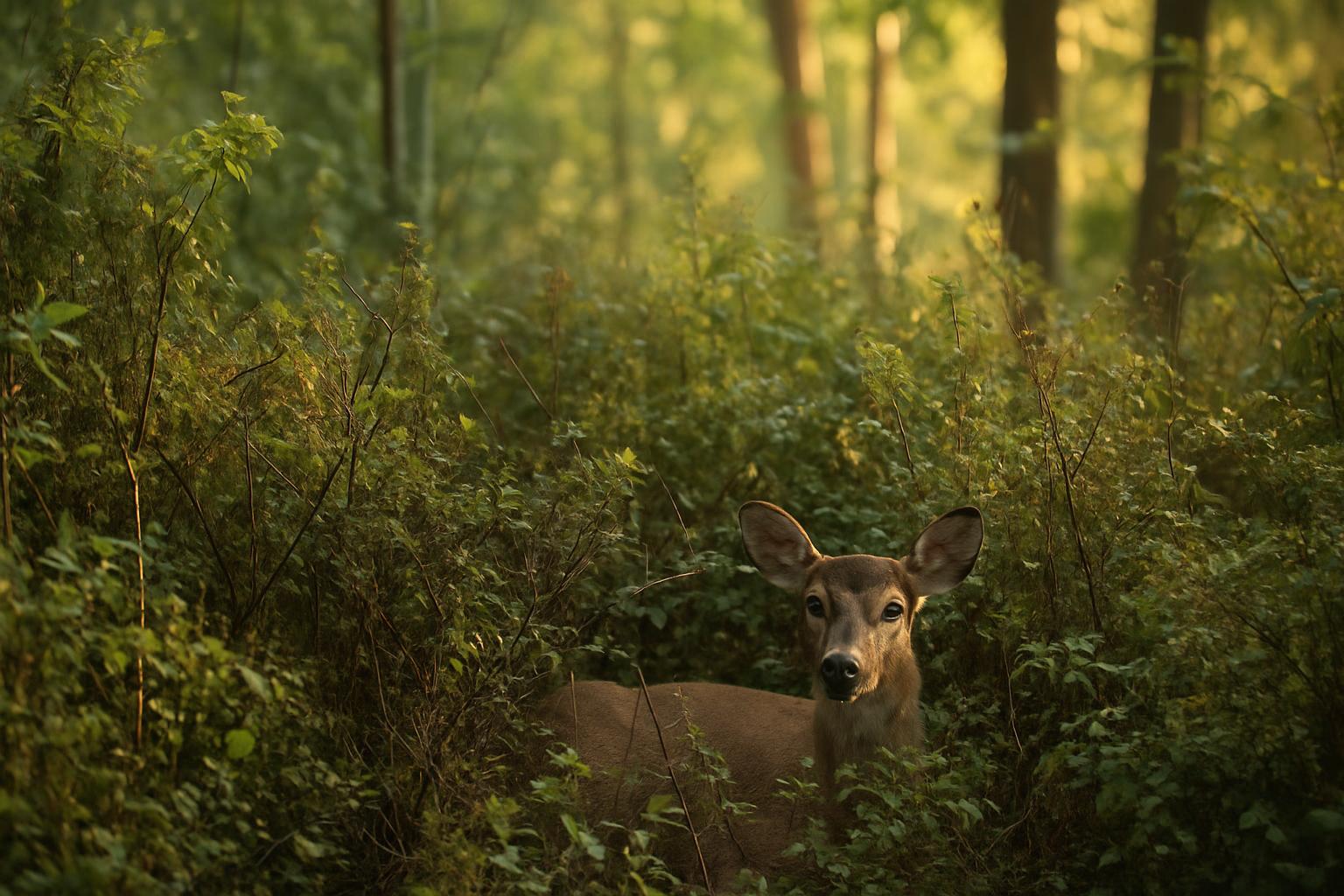
If deer are moving through your property at night but disappearing by dawn, the problem is usually bedding cover — or the lack of it. Deer don't bed randomly. They choose specific locations that meet a precise set of security, thermal, and sensory requirements. If your land doesn't offer those conditions, deer will find them somewhere else and use your acreage only when traveling between better habitats.
On small properties — five to fifty acres — every habitat improvement has an outsized impact because you're influencing a higher percentage of the deer's core area. A single well-placed bedding area on a 20-acre parcel can change how deer use the entire property. Here's how to build one.
Step 1 — Identify Where Deer Want to Bed Before You Change Anything
Before you cut a single tree or plant anything, spend two or three mornings in late winter or early spring walking your property and mapping where deer are already bedding. Trying to force deer into a location they haven't chosen naturally takes longer and produces less reliable results than improving a site they're already using.
Look for these signs:
Oval depressions in leaf litter or grass. A fresh deer bed compresses the ground surface into a body-shaped oval 18 to 24 inches wide and 36 to 48 inches long. In dry leaves, the depression stays visible for several days. Multiple depressions in a cluster indicate a repeatedly used site.
Deer hair on vegetation. Coarse brown or gray guard hairs catch on low branches, grass stems, and brush edges at the perimeter of a bed. Finding hair in a scraped depression confirms recent use.
Concentrated scat near dense cover. Deer typically defecate when rising from a bed. Repeated scat piles on the edge of thick cover — especially when they appear in the same spot across multiple visits — indicate a bedding area within 30 to 50 yards.
Trail convergence into thick areas. Multiple trails entering a dense patch from different directions, with few trails exiting toward open ground, typically indicate a bedding hub rather than a feeding or travel site.
Map what you find. Note the compass aspect of each site, the overhead cover type, the nearest food source, and approximate distance to water. Most bedding areas on small properties will cluster in a pattern that tells you exactly where to focus your improvement work.
Step 2 — Use Hinge Cutting to Create Immediate Cover
Hinge cutting is the fastest, cheapest, and most effective method for creating bedding cover on properties with existing timber. A single person with a chainsaw can hinge-cut a quarter acre of timber in three to four hours, producing dense horizontal cover that deer will start using within days of completion.
How to hinge cut: Select trees six to ten inches in diameter. Cut through the trunk at knee height — roughly 18 to 24 inches off the ground — but stop when you feel the trunk start to lean. Push the top over without completing the cut. Done correctly, the cambium on the hinge side remains intact, keeping the tree alive for one to three years. The fallen top produces a dense tangle of branches and leaves that provides immediate ground-level concealment.
Species selection matters. Oaks, maples, and most hardwoods hinge well in late winter before sap rises — February through early March in most of the whitetail range. Avoid hinge cutting in late spring or summer when sap is flowing; survival rates drop sharply. Leave conifer species standing as vertical structure — dropping them wastes thermal cover.
Work in patches, not lines. Hinge cut in contiguous blocks of at least a quarter acre. A solid patch of horizontal cover creates the security and concealment deer require; a row of hinge-cut trees along a fence line does not. Leave 20 to 30 percent of the trees in each block standing as vertical canopy to maintain overhead cover over the fallen tops.
Leave the edges ragged. A sharp, linear edge between a hinge-cut patch and adjacent open ground is less attractive to deer than a gradual transition. Feather the perimeter by cutting progressively shorter trees at the edge and leaving occasional tall shrubs intact.
Step 3 — Plant Native Shrubs for Permanent Structure
Hinge cutting provides immediate cover but declines over three to five years as the fallen tops die back. For permanent bedding improvement, native shrub plantings create lasting structure that improves with age.
Effective native shrub species for bedding cover:
- Hawthorns (multiple native species) — thorny, dense, and attractive to deer for both cover and browse. Plant in groups of five to ten, spaced four to six feet apart. Mature at six to ten feet height in five to seven years.
- Wild plum (Prunus americana) — spreads by root sprouts to form dense thickets. Plant a handful of bare-root whips and the patch will spread on its own within three to four years.
- Dogwoods (especially silky and gray dogwood) — fast growing, multi-stemmed, and tolerant of wet or shaded conditions that other species avoid.
- American elderberry — reaches six to eight feet in two to three years, provides fruit, and spreads aggressively in moist areas.
Plant in blocks of at least a quarter acre to create the enclosed cover that deer prefer. Isolated shrubs planted in rows or small clusters do not produce the security cover deer seek for bedding. Budget for a weed barrier or mulch layer around each plant — competition from grass during the first two years is the primary cause of shrub planting failure.
Step 4 — Establish Switchgrass for Low-Cost Cover That Works Fast
Native warm-season grasses — switchgrass in particular — create dense bedding cover from late June through the following spring, hold their structure after frost better than any other herbaceous plant, and can be established from seed for $15 to $30 per acre on prepared ground.
Establishment: Spray the planting area with glyphosate in late April or early May to kill existing vegetation. Wait 10 to 14 days, then broadcast switchgrass seed at 6 to 8 pounds of pure live seed per acre. Rake lightly to ensure seed-to-soil contact. Do not mow during the first growing season — switchgrass establishes slowly and most of its first-year growth is below ground. In the second year, stands typically reach five to six feet by midsummer.
Planting location: A south-facing slope or open area with full sun produces the densest, tallest switchgrass. A half-acre block on a south-facing hillside becomes prime bedding habitat by the end of the second growing season. Deer use the interior for beds and browse the edges throughout the growing season.
Maintenance: Burn or mow switchgrass every two to three years in late winter to prevent dead material accumulation and maintain stand vigor. Mow to four inches — not lower — to avoid damaging the crown.
Step 5 — Protect Bedding Areas from Human Pressure
Every physical improvement you make to a bedding area is undone if you walk through it regularly. Human scent in a bedding area is the fastest way to push deer off a property entirely, or at minimum to shift their activity to nighttime hours.
Once you've created or improved a bedding area, establish clear rules for entry:
No entry from May 1 through hunting season. Trail cameras near bedding areas should be serviced only during midday when deer are least likely to be present, and only when wind conditions allow your approach without contaminating the bedding zone.
Route all access trails around bedding areas. If an existing trail passes within 100 yards of a bedding area, reroute it. The minor inconvenience of a longer walk to a stand is insignificant compared to the cost of blowing out a bedding area with repeated scent contamination.
Never hunt directly over a bedding area. Position stands 80 to 150 yards downwind of bedding edges on travel corridors to food sources. Hunting the transition zone — not the bed itself — lets you take deer on their feet in daylight without alerting the herd to your presence in their core sanctuary.
Key Takeaways
- Map existing deer beds before changing anything — improving a site deer have already chosen produces faster results than building cover from scratch.
- Hinge cut trees six to ten inches in diameter in late winter to create immediate horizontal cover; work in blocks of at least a quarter acre, not rows.
- Plant native shrubs — hawthorn, wild plum, dogwood, elderberry — in solid blocks to create permanent bedding structure that improves with age.
- A half-acre switchgrass planting on prepared ground costs $15 to $30 in seed and becomes functional bedding cover within two growing seasons.
- Human intrusion is the fastest way to destroy a bedding area — route trails around bedding zones and restrict entry to midday visits during the off-season.
- Hunt the transition between bedding and feeding, 80 to 150 yards downwind of the bedding edge, rather than hunting directly over beds.
Stop Seeing Deer Only at 2 AM — Get the Free 10-Point Habitat Fix
Your property has specific, fixable gaps — and most 1–50 acre hunters never find them. This free checklist pinpoints exactly what's missing and tells you what to change first so deer start showing up when you can actually hunt them.
- ✓ The food plot timing that pulls deer into daylight hours
- ✓ How to build bedding cover with just a chainsaw (no equipment needed)
- ✓ Stand placement mistakes silently blowing out your property
- ✓ The #1 pressure rule most hunters skip — and deer remember
- ✓ Low-pressure access routes most small acreage owners never plan