How to Plant Native Trees for Wildlife Habitat on Rural Property
Why Native Trees Matter
Native trees evolved alongside local wildlife for thousands of years. They provide the exact food, shelter, and nesting habitat that birds, pollinators, and mammals depend on — far more effectively than ornamental or non-native species. On rural and agricultural land, a well-placed grove of native trees can transform bare pasture into a thriving wildlife corridor. Unlike exotic landscaping trees, native species support entire food webs. A single native oak can support over 500 species of caterpillars alone, which in turn feed songbirds during nesting season. This ecological richness simply cannot be replicated with ornamental plantings.
Beyond wildlife value, native trees improve soil health, reduce erosion, and increase property resilience. Their deep root systems hold stream banks, filter runoff, and build organic matter over time. For landowners managing rural acreage, a strategic native tree planting is one of the most cost-effective land improvements available.
Best Native Trees by Region
Selecting the right species for your climate and soil type is the single most important decision. Here are strong performers across common rural property contexts:
- White Oak (Quercus alba) — Produces acorns favored by deer, turkey, squirrels, and dozens of bird species. Long-lived and drought-tolerant once established.
- Serviceberry (Amelanchier spp.) — One of the first trees to fruit in spring, feeding migrating birds at a critical time. Compact size makes it ideal for field edges.
- Eastern Red Cedar (Juniperus virginiana) — Provides dense winter cover and berries for cedar waxwings and bluebirds. Extremely hardy and fast-growing.
- Black Cherry (Prunus serotina) — Hosts over 450 caterpillar species, making it a powerhouse for nesting birds that feed their young on insects.
- Persimmon (Diospyros virginiana) — Late-season fruit that persists into winter, feeding deer, raccoons, and fox when other food is scarce.
Regional variation matters. In the upper Midwest, bur oak and shagbark hickory are exceptional wildlife producers. In the Southeast, swamp chestnut oak and wild plum fill similar roles. Consulting your local extension office or state forestry department will help you identify which species are native to your specific county and available through local nurseries or seedling programs.
Establishment Tips for Fast Success
Young trees are vulnerable. These practices dramatically improve survival rates:
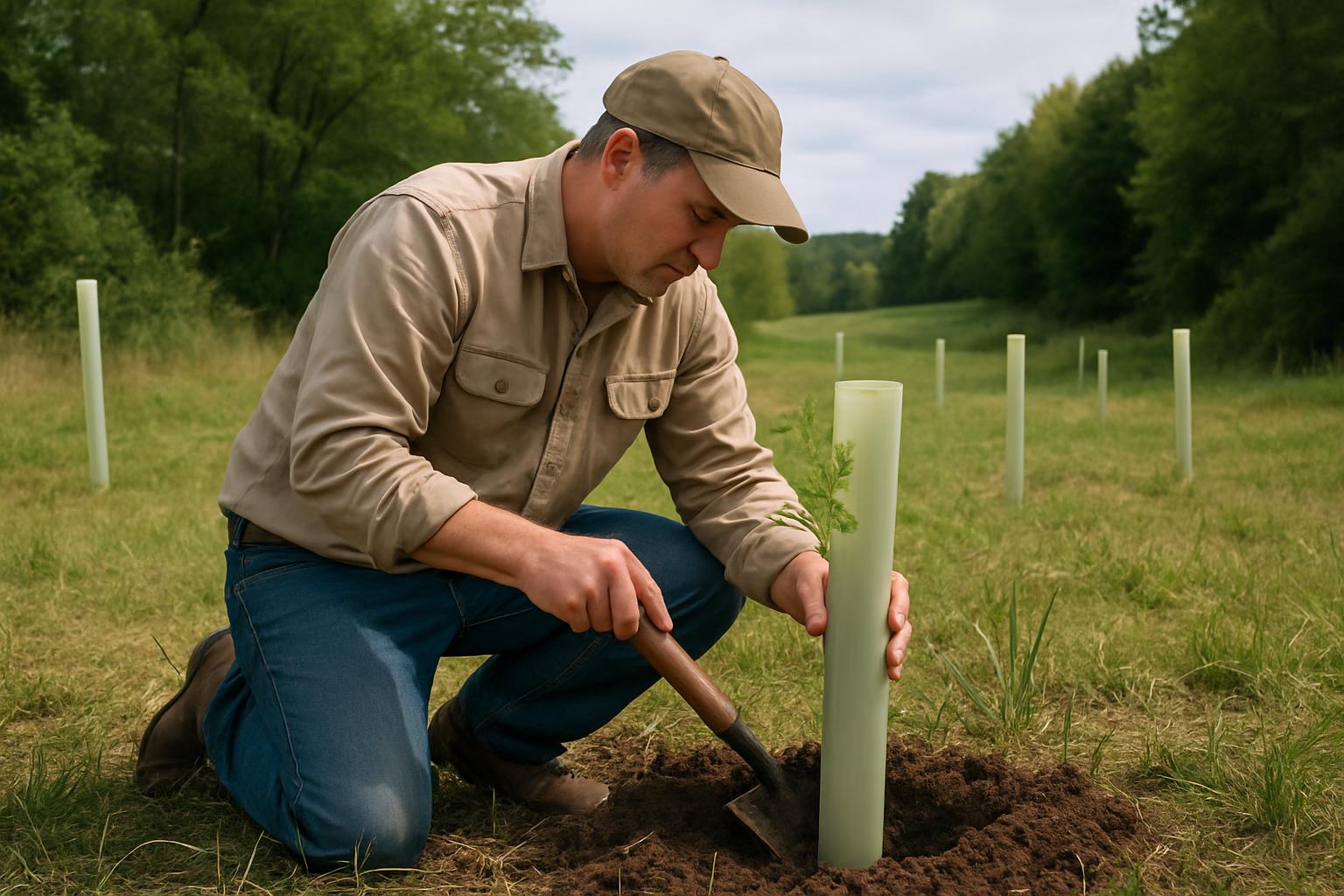
- Use tree tubes or mesh guards. Deer browse kills more transplants than drought does. A 5-foot tube gives the tree a fighting chance and creates a mini-greenhouse effect that accelerates growth.
- Mulch a 3-foot ring. Suppress grass competition — the number one killer of new transplants — with 3–4 inches of wood chip mulch kept away from the trunk.
- Plant in fall or early spring. Cooler temperatures and seasonal rainfall reduce transplant shock and give roots time to establish before summer heat.
- Source locally. Trees grown from local seed stock are better adapted to your specific climate and pest pressure. Contact your state forestry department for native bare-root seedling programs, which are often available at low cost.
- Group plantings. Wildlife prefer edge habitat — the transition zone between open land and woodland. Plant in clusters of 10–20 trees rather than single rows to create this structure faster. Consider seeding native warm-season grasses between cluster plantings — switchgrass and big bluestem fill open ground between young trees with cover and food value while the canopy matures.
Spacing and Layout
For a wildlife planting rather than timber production, irregular spacing mimics natural forest structure. Aim for a dominant canopy layer (oaks, walnuts), a mid-story layer (serviceberry, dogwood, hawthorn), and a shrub layer (native viburnums, elderberry). This three-layer structure provides year-round food and shelter for the widest range of species. While native trees establish over years, hinge cutting existing trees in adjacent woodlots delivers immediate horizontal cover and browse while your plantings mature.
When planning your layout, consider how sunlight and wind move across your property. South-facing slopes warm faster in spring and are ideal for early-blooming species. North-facing slopes retain moisture longer and suit species that prefer cooler, shadier conditions. Planting along existing fence lines, ditches, or stream corridors maximizes the edge effect that wildlife actively seek out for travel and feeding. See Fence Line Management for how to prepare those corridors to support both tree establishment and long-term wildlife use.
Maintenance in Years 1–3
The first three growing seasons are critical. Check tree tubes after every significant storm and remove any that are restricting growth. Mow or spray a 4-foot radius around each tree twice a year to reduce grass competition. After year three, most native trees establish enough root mass to become largely self-sufficient.
Keep a simple planting log that records species, location, planting date, and any notes on survival and growth. This record is invaluable when you order replacements, plan future phases, or want to share what worked with neighbors. Document failures too — a 20 percent loss rate is normal, and knowing which species struggled in which microsite helps you make better decisions on the next round of plantings.
Long-Term Returns
A native tree planting is a gift to your property that compounds over decades. Once canopy and understory develop, pairing the planting with dedicated bedding cover improvements nearby completes the habitat picture and gives deer every reason to stay on your land. A white oak planted today will begin producing significant acorn crops in 20 years and continue for 200 more. The habitat value, land value improvement, and personal satisfaction of watching wildlife move through a landscape you shaped make it one of the best investments a rural landowner can make.
Over time, your planting will require less management and begin to self-regenerate as birds and mammals cache seeds and drop fruit. You may find volunteer seedlings of species you never planted, drawn in by the habitat structure you created. That self-sustaining quality — land that works for wildlife with minimal ongoing effort — is the ultimate goal of every native tree planting project.
Stop Seeing Deer Only at 2 AM — Get the Free 10-Point Habitat Fix
Your property has specific, fixable gaps — and most 1–50 acre hunters never find them. This free checklist pinpoints exactly what's missing and tells you what to change first so deer start showing up when you can actually hunt them.
- ✓ The food plot timing that pulls deer into daylight hours
- ✓ How to build bedding cover with just a chainsaw (no equipment needed)
- ✓ Stand placement mistakes silently blowing out your property
- ✓ The #1 pressure rule most hunters skip — and deer remember
- ✓ Low-pressure access routes most small acreage owners never plan