Creating Bedding Areas That Hold Deer on Your Property Year-Round
If you have put in a food plot, hung feeders, and set up trail cameras, but you are still not holding deer on your property, there is a good chance you are missing one key ingredient: quality bedding cover.
Deer do not just need food. They need a place to feel safe. A property that offers both food and security will hold deer far better than one with plenty of groceries but no place to rest.
Why Bedding Cover Is the Missing Piece
Most landowners focus on food sources, and that makes sense. Food plots are visible. You can walk out and see the results. Bedding areas are less obvious, but they matter just as much.
A deer spends the majority of its day bedded. It is resting, digesting food, and watching for danger. If your property does not offer safe, comfortable places to do that, deer will find those places somewhere else and only visit your land to eat before returning to bed down next door.
Creating or improving bedding habitat gives deer a reason to live on your land, not just pass through it.
What Deer Look for in a Bedding Area
Deer are particular about where they bed. They prefer spots that offer several things.
First, thermal cover. Dense vegetation like thick brush, young conifers, and tall grasses blocks wind and holds heat in winter. In summer, deer want shade and airflow.
Second, sight lines and escape routes. Deer like to bed where they can see or smell danger approaching. A slight rise, a thicket edge near a field, or a bowl in the terrain where wind swirls all give deer an advantage.
Third, low disturbance. Deer learn quickly which areas get human traffic. Bedding areas need to be places you do not walk through regularly, especially during hunting season.
Fourth, proximity to food and water. Deer will not bed far from resources. Ideally, bedding cover is within a few hundred yards of a food source and reasonably close to water. See How to Build a Food Plot That Deer Will Actually Use for guidance on positioning plots to work with the bedding areas you are creating.
Finding the Right Spots on Your Property
Before you start any habitat work, walk your land and look for areas that already show signs of use. Look for deer trails leading into thick cover, beds scraped into the ground, or concentrated droppings.
Also look at your topography. Deer often bed on south-facing slopes in cold weather because those slopes warm up faster in the morning sun. Ridgetops and fingers of cover that extend into open ground are also popular.
If you have areas that are already brushy or overgrown, those are your starting points. You do not always need to create something new. Often you just need to improve what is already there.
Improving Existing Cover
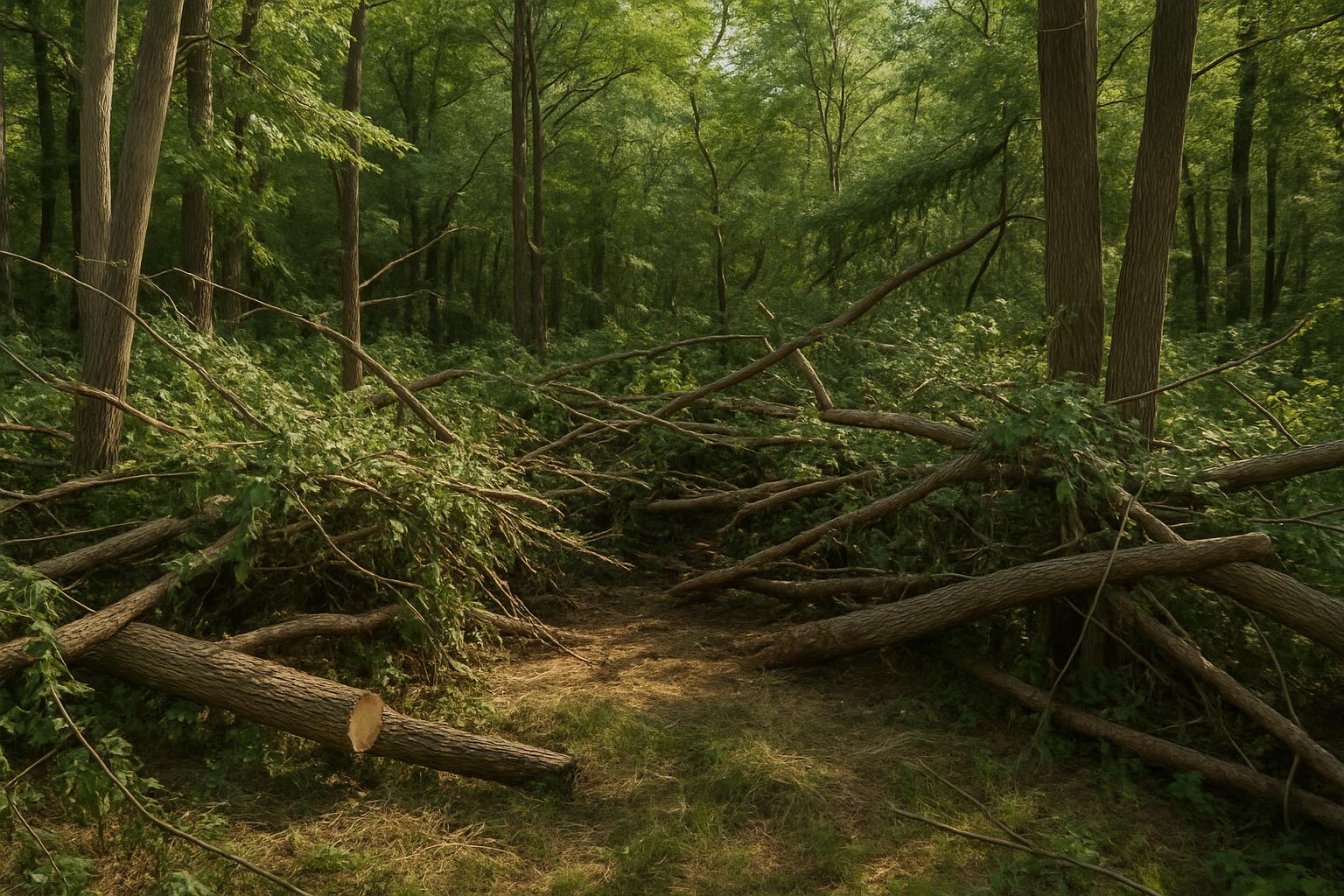
One of the simplest and most effective ways to improve bedding cover is hinge-cutting. This involves cutting a tree partway through at roughly chest height so it falls but stays partially alive. For a complete guide to timing, species selection, and block layout, see Hinge Cutting for Deer Habitat on Small Acreage. The downed top creates an immediate tangle of branches and, if the tree survives, leafs back out the following season.
Focus on low-value trees like ironwood, box elder, or overcrowded mid-story trees. Hinge-cutting opens the canopy, which lets sunlight hit the ground and stimulates the growth of shrubs and grasses. Within a season or two, you can turn a sparse woodlot into a dense, productive bedding area.
Timber stand improvement work, which means removing competing trees to favor mast-producing oaks or fruit trees, also benefits bedding areas by creating a more varied structure with open pockets and dense edges.
Creating Bedding from Scratch
If your land is mostly open fields with little cover, you will need to create structure. There are several good options.
Native grass plantings are one of the best investments you can make. Warm-season grasses like switchgrass, big bluestem, and Indian grass grow four to six feet tall and create excellent thermal cover. For a full establishment guide — including site prep, seeding rates, and first-year management — see How to Establish Native Warm-Season Grasses for Wildlife Cover. Plant them in blocks or strips near food sources. They establish slowly but last for decades with minimal maintenance.
Shrub thickets are another strong option. Planting native shrubs like dogwood, elderberry, and wild plum creates multi-use cover that deer use for both bedding and food. These also attract other wildlife and support pollinators.
Brush piles are quick and easy. If you are clearing timber or doing hinge-cut work, stack the tops and slash into large brush piles. Deer will use these immediately as wind breaks and low-level cover.
Finally, early successional areas can be created simply by stopping disturbance. If you have fields or old agricultural ground you are not actively using, stopping mowing and tilling allows natural succession to begin. Goldenrod, briars, and young woody growth come in quickly and create ideal bedding structure.
Common Mistakes to Avoid
Do not make bedding areas too accessible. If you can walk easily through a bedding area, deer will not use it during daylight. Let it get thick and uncomfortable for people to move through.
Avoid putting bedding areas too close to roads or regular activity. Deer pattern human pressure quickly. If a spot gets walked or driven past regularly, deer will avoid it during shooting light.
Think about wind when placing bedding cover. The best bedding areas work with the natural thermal currents and prevailing winds on your property. Consider how deer will approach and exit without crossing your scent.
Finally, do not give up too soon. Habitat work takes patience. A hinge-cut area might look like a mess in year one but be a top producer by year three.
How Long Before You See Results
Some improvements show results quickly. Brush piles get used within days. Native grass plantings may take two to three growing seasons to establish properly.
Hinge-cut work and shrub plantings typically start showing real use by the second or third year as the cover matures.
Trail cameras placed on the edges of new bedding areas, not inside them, will tell you how deer are responding. Look for does first. When does start using an area consistently, bucks follow.
Start Small, Then Build
You do not need to overhaul your entire property at once. Pick one or two spots that already show some deer use or that have the right topography and start there.
Do the work. Give it time. Check your cameras. Then expand from what is working.
Holding deer on your land year-round comes down to giving them what they need to feel safe. Get that right, and the food plots and stand locations fall into place around it.
Stop Seeing Deer Only at 2 AM — Get the Free 10-Point Habitat Fix
Your property has specific, fixable gaps — and most 1–50 acre hunters never find them. This free checklist pinpoints exactly what's missing and tells you what to change first so deer start showing up when you can actually hunt them.
- ✓ The food plot timing that pulls deer into daylight hours
- ✓ How to build bedding cover with just a chainsaw (no equipment needed)
- ✓ Stand placement mistakes silently blowing out your property
- ✓ The #1 pressure rule most hunters skip — and deer remember
- ✓ Low-pressure access routes most small acreage owners never plan