How to Build a Food Plot That Deer Will Actually Use
Why Most Food Plots Fail Before They Start
Every fall, landowners across the country plant food plots with high hopes and end up with bare dirt or weedy patches that deer walk past. The problem is almost never the seed. It is the process — skipped steps, wrong timing, or a bad location.
A food plot does not need to be large to be effective. Even a quarter-acre patch in the right spot, with the right soil, at the right time of year, can pull deer consistently. Here is how to build one that works.
Start With a Soil Test
This is the step most people skip, and it is the single biggest reason food plots fail.
Soil in most regions is too acidic for clover, brassicas, or chicory to thrive. If your soil pH is below 6.0, your plants will struggle no matter how good your seed is. Lime can fix this, but it takes time — at least two to three months to shift pH after application.
Order a soil test through your local cooperative extension office. It costs between $10 and $20 and tells you your pH, phosphorus, potassium, and nitrogen levels. The report will include specific lime and fertilizer recommendations for whatever crop you plan to grow.
Do not guess. A bag of lime costs $5. Replanting a failed food plot costs time, money, and a season of opportunity.
Pick the Right Location
Deer move along edges, travel from bedding to feeding areas, and prefer to approach food sources with the wind in their favor. Your plot location should work with those patterns, not against them.
Look for spots that connect bedding cover to open feeding areas. Narrow strips along field edges or in timber clearings tend to work better than large open plots because deer feel safer feeding close to cover. See Understanding Deer Bedding Areas on Small Acreage for how to identify where deer are already resting so you can position food plots along their natural routes.
Avoid low-lying areas that hold standing water. Saturated soil kills plant roots and makes field preparation difficult.
Also consider your own access. Can you reach the plot without crossing through bedding areas? Walking through a deer's core area every time you check a camera or tend the plot will push animals off the property. Timber stand improvement work in surrounding woodlots can open access corridors that route you around bedding areas while also improving habitat quality.
Choose the Right Seed
Match your seed to your goal and your season.
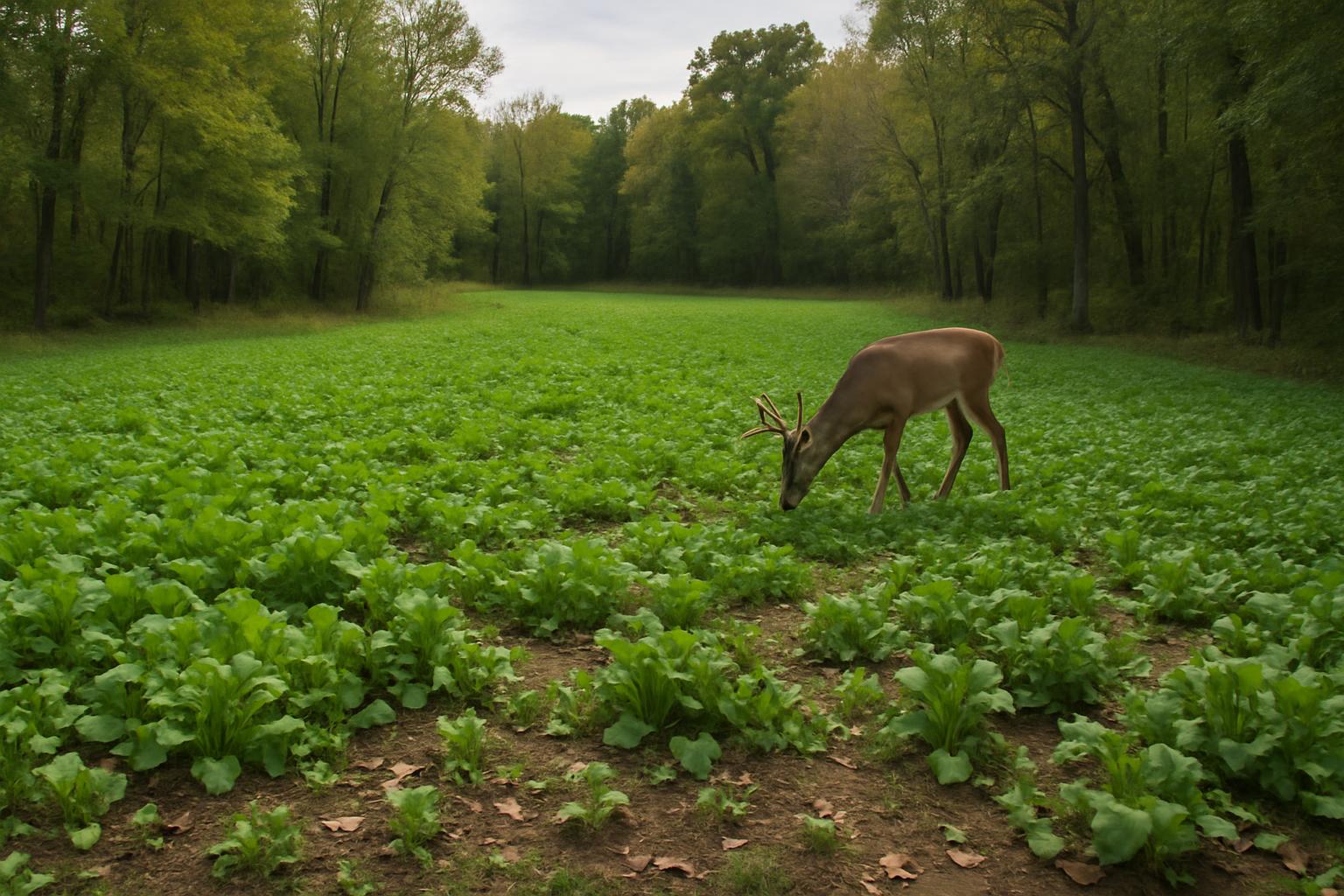
For fall hunting plots, brassicas and winter rye are hard to beat. Turnips, radishes, and rape become more attractive to deer after the first hard frost, which breaks down bitter compounds and makes the plants sweeter. They hold through the winter when other food sources are scarce.
Clover is the workhorse of perennial food plots. It comes back year after year, tolerates moderate traffic, and is high in protein during spring and summer when deer need it most for antler development and fawn growth. White clover handles wetter soils well. Red clover does better in drier conditions.
For beginners, a mix of clover and chicory seeded into a well-limed plot is one of the most reliable starting points available. If cost is a constraint, How to Plant a Food Plot on a Budget covers the minimum-spend approach — soil test, seed selection, and no-till prep — that still delivers a productive plot without heavy equipment.
Get the Timing Right
For fall plots, plant brassicas six to eight weeks before your first expected frost. In most of the Southeast, that means late August or early September. In the Midwest and Northeast, mid-August is safer. This gives plants enough time to establish before hunting season and deer pressure begins.
For perennial plots like clover, a late summer planting — August in most regions — lets the plant establish roots before winter. Spring planting is a backup option, but summer heat and drought can stress young seedlings before they get a foothold.
Always follow the seeding rate on the bag. Over-seeding is a common mistake. Too many seedlings competing for space leads to weak, crowded plants.
Prepare the Seedbed
You do not need a tractor to make a productive food plot, but you do need bare soil.
If you are starting in a weedy field, spray with glyphosate two weeks before planting. This clears existing vegetation and gives your new seed a clean start without competition.
If you have tillage equipment, disc or till the soil to a depth of four to six inches. This breaks up compaction, improves drainage, and creates loose soil for good seed contact.
If you are working in a tight timber opening without equipment, a hand-operated seeder combined with foot traffic to press seed into the soil can get adequate germination in a pinch.
Seed-to-soil contact is the goal. Seed sitting on top of hard, packed ground will not germinate reliably.
Apply Lime and Fertilizer
Spread lime first if your soil test calls for it. Work it in during tillage when possible to speed up the pH shift.
Apply fertilizer close to your planting date. A starter blend with phosphorus and potassium — something like a 5-10-10 ratio — supports root development in new plantings. For legumes like clover, which fix their own nitrogen, avoid heavy nitrogen fertilization. It can reduce the root nodule activity that makes clover valuable in the first place.
Follow the recommendations from your soil test. More is not always better with fertilizer.
Keep Up With Maintenance
Once your plot is established, the work is not done.
Mow clover plots in summer to keep them from going to seed and to push out new leafy growth. Deer prefer young, tender forage. Mowing also helps manage weeds before seed heads spread.
Re-apply lime and fertilizer every two to three years, guided by follow-up soil tests. Soil chemistry shifts over time, especially in plots that receive heavy deer use.
Watch for thin spots and overseed them in late summer before they become weed patches.
What to Expect in Year One
A well-built food plot takes time to fully pay off.
Your first season may be quiet. Deer are naturally cautious around new features in their home range. By the second and third year, once the plot is established and deer have accepted it as a reliable food source, consistent use becomes the norm.
If a plot underperforms, check the fundamentals before giving up — soil pH, weed pressure, and plot location are the usual culprits.
A food plot is not a shortcut. It is a land management tool. Done right, it improves the carrying capacity of your property, keeps deer on your land through the season, and gives you more predictable movement when it matters most. That return is worth the work it takes to do it correctly. For maximum impact, pair food plots with hinge cutting in adjacent timber to create the bedding cover that keeps deer on your property between feeding sessions.
Stop Seeing Deer Only at 2 AM — Get the Free 10-Point Habitat Fix
Your property has specific, fixable gaps — and most 1–50 acre hunters never find them. This free checklist pinpoints exactly what's missing and tells you what to change first so deer start showing up when you can actually hunt them.
- ✓ The food plot timing that pulls deer into daylight hours
- ✓ How to build bedding cover with just a chainsaw (no equipment needed)
- ✓ Stand placement mistakes silently blowing out your property
- ✓ The #1 pressure rule most hunters skip — and deer remember
- ✓ Low-pressure access routes most small acreage owners never plan