How to Fix Soil Compaction in Small Pastures
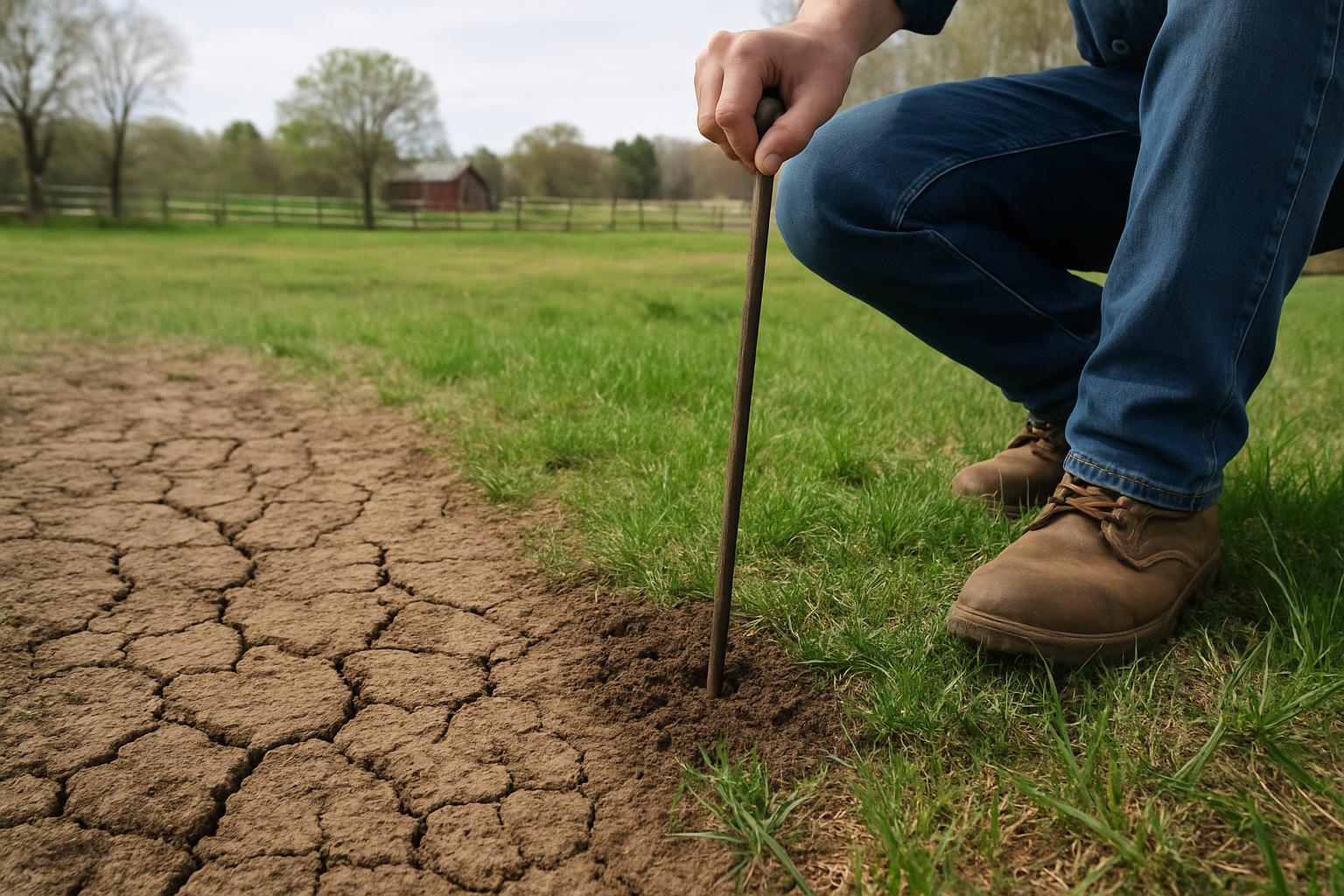
Compacted soil kills pasture productivity faster than drought or poor seed selection. If your small pasture looks thin, drains poorly, or barely recovers after grazing, compaction is likely the culprit — and fixing it doesn't require expensive equipment or agronomists. With the right timing and a few targeted tools, you can break up compaction, restore soil structure, and get grass growing thick again within a single season.
What Soil Compaction Actually Does to Your Pasture
Soil compaction happens when the pore spaces between soil particles collapse under repeated pressure — from hooves, tires, or even just rainfall on bare ground. In a healthy pasture, those air and water pockets make up 40 to 60 percent of the soil volume. In a compacted pasture, that drops to 20 percent or less.
The consequences are cascading. Grass roots hit a hard layer and stop growing down, which means they can't access deep moisture during dry spells. Water can't infiltrate fast enough during rain, so it sheets off the surface and takes topsoil with it. Beneficial soil organisms — earthworms, bacteria, fungi — decline without adequate air and moisture movement.
On a small acreage operation where every square foot of pasture matters, a compacted paddock can cut carrying capacity in half. A two-acre paddock that should support one cow-calf pair per month might struggle to maintain a horse for two weeks once compaction sets in.
How to Diagnose Compaction Before Spending Money
Before you rent equipment or amend soil, confirm that compaction is actually your problem. Visual clues are helpful but not definitive — thin pasture can come from shade, poor fertility, or wrong species for your region.
The screwdriver test is the fastest field diagnostic. Take a standard screwdriver and push it into moist soil using only hand pressure. In healthy pasture soil, it should sink 6 to 8 inches easily. If it stops at 3 to 4 inches, you have compaction in the topsoil layer. If it stops at 1 to 2 inches, you're dealing with severe compaction or a hardpan layer.
Look for these additional signs:
- Puddles that linger more than 30 minutes after light rain on flat ground
- Pasture grasses that look stressed in wet years, not just dry ones
- Thin, patchy regrowth after you rotate animals off a paddock
- Visible hoof pock marks that stay visible weeks after animals moved on
- Earthworms absent when you dig a 6-inch hole in mid-spring
Do the screwdriver test in at least five spots per paddock — near water tanks, near gates, in open areas, and along fence lines. Compaction often concentrates near high-traffic zones.
Timing Your Fix: When to Aerate and When to Wait
The single most important variable in compaction management is soil moisture at the time you work it. Aerating or tilling dry soil shatters structure without restoring it. Aerating wet soil smears pores shut instead of opening them. You want the soil moist enough to work cleanly but firm enough to hold structure.
Target moisture: Squeeze a handful of soil from 4 inches deep. It should form a ball when compressed but crumble when you poke it with a finger. If it ribbons or stays in a slick ball, wait for it to dry. If it falls apart and won't form a ball at all, add a half-inch of irrigation or wait for rain.
Best timing by region:
- Southeast and Gulf Coast: Fall (September–October) after summer heat breaks, before winter rye establishment
- Upper Midwest and Great Plains: Early spring (April–May) when soil thaws but before summer heat
- Pacific Northwest: Early fall before the rainy season begins
- Southwest: After monsoon rains moisten the soil (August–September)
Avoid aerating during active grass growth stress — midsummer heat in the South or during drought. You'll open the soil just in time to dry it out faster.
Tools That Work for Small Acreage
You don't need a full-size tractor and commercial aerator to fix compaction on 1 to 15 acres. The right tool depends on your acreage, your budget, and the severity of the compaction.
Walk-behind core aerator (1–3 acres): A rental core aerator pulls plugs 3 to 4 inches deep and deposits them on the surface. It works well for mild to moderate compaction in established pastures. Rental cost runs $75 to $120 per day. Run it twice — once north-south, once east-west — for best coverage. Leave the cores on the surface to break down.
ATV-pulled aerator (3–15 acres): A pull-behind core aerator for an ATV or small UTV covers more ground efficiently. Models with 48-inch widths cost $400 to $700 to purchase, or can often be rented from farm supply stores. Works well for moderate compaction.
Subsoiler or chisel plow (severe compaction): If your screwdriver test shows a hardpan layer below 6 inches, a core aerator won't reach it. A subsoiler shank pulled through at 10 to 14 inch depth breaks deep compaction. You'll need at least a 25-horsepower tractor or a rental machine. Run shanks 24 inches apart. This disrupts established pasture more aggressively, so plan to overseed immediately after.
Biological aerators — grazing animals and cover crops: On pastures that aren't yet severely compacted, strategic grazing rotation and deep-rooted cover crops can rebuild soil structure over 2 to 3 seasons without equipment. Tillage radishes, turnips, and chicory drive roots 12 to 18 inches into the soil and leave channels when they decompose over winter. Broadcast these at 4 to 6 pounds per acre in late summer and let them winter-kill.
Reseeding After Aeration
Aeration disrupts existing sod. Unless your pasture is in genuinely good shape, plan to overseed immediately after — the open soil channels created by aerating are ideal seedbeds.
Overseeding rates for small pastures:
- Tall fescue (endophyte-free or novel endophyte): 20 to 25 lb/acre in fall
- Bermudagrass: 5 to 8 lb/acre of hulled seed in spring when soil is above 65°F
- Orchardgrass + red clover mix: 10 lb orchardgrass + 5 lb clover per acre in early spring
- Annual ryegrass (quick cover): 20 to 25 lb/acre for immediate erosion control and forage while perennials establish
Broadcast seed within 48 hours of aerating and use a drag, cultipacker, or even a section of chain link fence dragged behind an ATV to press seed into the soil. Germination requires seed-to-soil contact — don't rely on rainfall to push seed into open holes.
Managing Animals After You Aerate
Rest the paddock from grazing for at least 60 days after aerating and reseeding, or until new growth reaches 6 to 8 inches. This is non-negotiable. Letting animals back on before roots establish will re-compact the loose soil and kill new seedlings before they anchor.
If you're running animals on a tight rotation with no flexibility in paddock rest, plan the aeration project to coincide with a period when that paddock naturally sits empty — after weaning, during hunting season, or over winter.
Once new growth is established and animals return, use rotation to prevent future compaction. A simple rule: move animals off a paddock before they graze it below 3 to 4 inches. At that point, the root system is depleted and each additional day of grazing does more damage than the forage gained is worth. Match stocking rate to your carrying capacity — if a paddock consistently looks beaten down at the end of a rotation cycle, either reduce animal numbers or add paddock divisions to shorten grazing days.
Long-Term Soil Health: What Keeps Compaction From Coming Back
Fixing compaction once without changing management conditions means you'll fix it again in three years. The sustainable path is building organic matter, which physically resists compaction.
Organic matter targets: Aim for 3 to 5 percent soil organic matter in pasture soils. Pull a soil test from your cooperative extension office (usually $10 to $20 per sample) — it will give you current OM percentage and fertility recommendations together.
Ways to build organic matter on small pastures:
- Leave clippings and plant residue on the surface rather than baling or removing
- Apply 1 to 2 tons of composted manure per acre every 2 to 3 years
- Include legumes (clover, lespedeza, chicory) in your seed mix — nitrogen fixing and deep-rooted
- Avoid bare ground — a living root in the soil 12 months per year feeds the biological community that maintains structure
Getting organic matter from 1 percent to 3 percent takes 5 to 10 years of consistent management. It's slow, but once you're there, the soil resists compaction dramatically better, needs far less synthetic fertilizer, and supports far more forage per acre.
Key Takeaways
- Diagnose before treating: use the screwdriver test to confirm compaction at 3 to 6 inches depth before spending money on equipment or amendments
- Time aeration to moist-but-not-wet soil conditions — aerating wet or dry soil makes compaction worse, not better
- Match your tool to your acreage and compaction depth: walk-behind aerators for 1–3 acres, ATV-pull for 3–15 acres, subsoiler only for severe hardpan below 6 inches
- Overseed within 48 hours of aeration at correct species-specific rates and press seed into the soil for good contact
- Rest the paddock 60 days minimum after aeration — returning animals too early undoes the work in a week
- Build organic matter over time to prevent recurrence: target 3 to 5 percent soil OM through cover crops, legume mixes, and composted manure applications
Stop Seeing Deer Only at 2 AM — Get the Free 10-Point Habitat Fix
Your property has specific, fixable gaps — and most 1–50 acre hunters never find them. This free checklist pinpoints exactly what's missing and tells you what to change first so deer start showing up when you can actually hunt them.
- ✓ The food plot timing that pulls deer into daylight hours
- ✓ How to build bedding cover with just a chainsaw (no equipment needed)
- ✓ Stand placement mistakes silently blowing out your property
- ✓ The #1 pressure rule most hunters skip — and deer remember
- ✓ Low-pressure access routes most small acreage owners never plan