How to Plant a Food Plot on a Budget
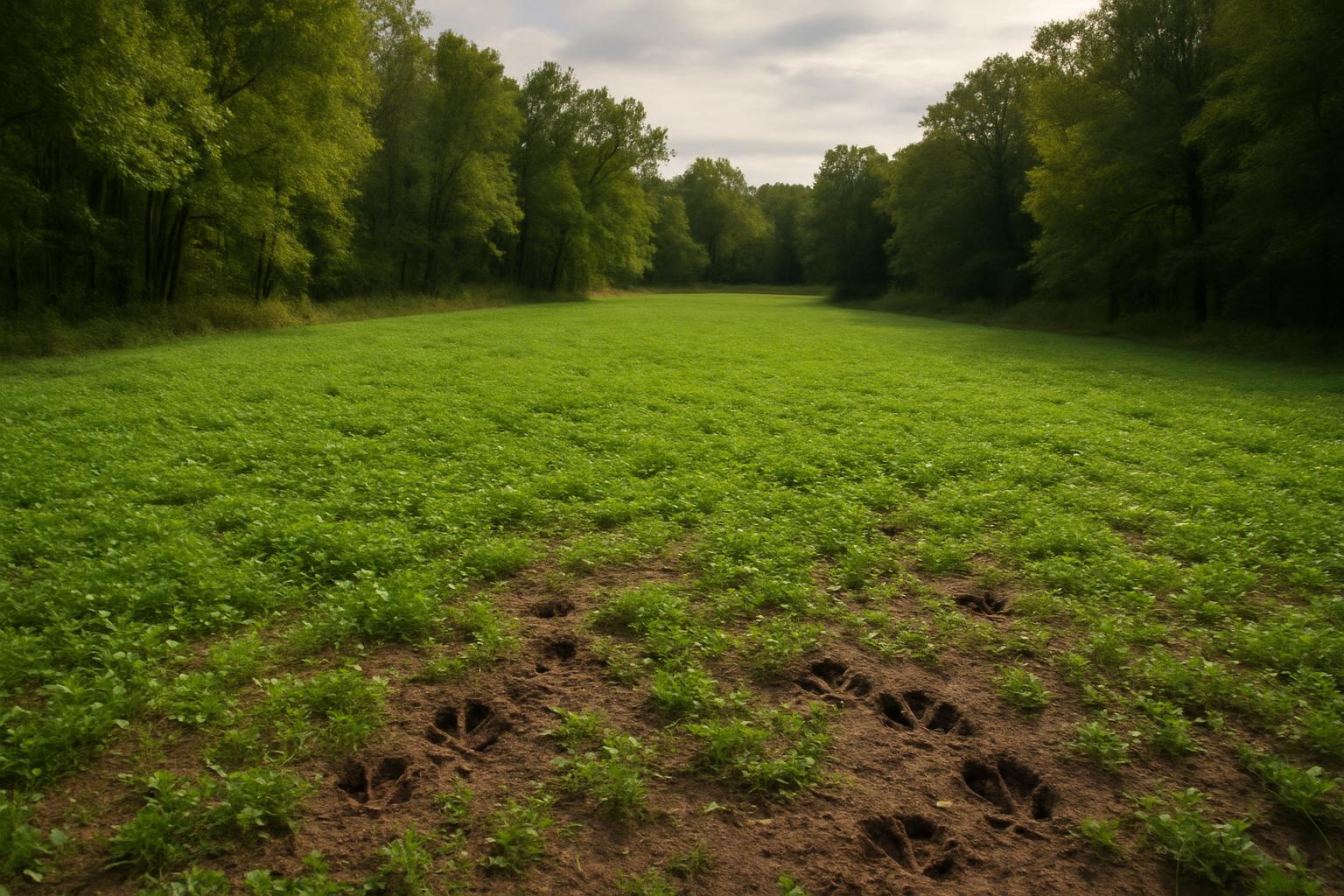
Food plots are one of the most effective tools a landowner has for improving deer habitat. Done right, they pull deer onto your property, keep them there through hunting season, and improve the overall health of the herd.
Done wrong, they are an expensive patch of weeds.
The good news is that a successful food plot does not require a big budget. It requires planning, good seed selection, and a little soil science.
Start With Your Soil
Before you spend a dollar on seed, get a soil test. Most county extension offices offer them for $10 to $20, and the results tell you exactly what your soil needs.
A soil test will show you the pH level and the nutrient balance. Most food plot plants do best at a pH between 6.0 and 7.0. The soil science principles behind food plot management overlap with broader sustainable farming techniques — that guide covers cover cropping and composting that can improve your plot ground over multiple seasons. If your soil is too acidic, lime is the fix. If it is low on phosphorus or nitrogen, fertilizer covers the gap.
Skipping the soil test is the most common reason food plots fail. You can plant the best seed in the world on bad soil and get nothing. Test first.
Choose the Right Location
You do not need a large field. A quarter-acre plot in the right spot will outperform five acres in the wrong one.
Look for areas near bedding cover. Deer move from beds to food, so a plot that sits between thick cover and a travel corridor will see consistent traffic. For a full breakdown of how deer select and use bedding areas, see Understanding Deer Bedding Areas on Small Acreage. Edges between timber and open ground are ideal.
South-facing slopes warm up earlier in spring and stay dry longer after rain. If you have options, pick those.
Avoid low spots that hold water or frost easily. Wet, compacted soil grows poor plants and can turn a plot into a mud hole by October.
Pick the Right Seed for Your Region
Seed selection matters more than most people think. Not every plant works in every climate or soil type.
For most of the country, a simple mix of clover and brassicas covers two seasons well. Clover establishes quickly, comes back each year, and deer use it heavily in spring and early fall. Brassicas — turnips, radishes, rape — take over in late fall when other food sources dry up. Deer will hammer brassicas after the first hard frost.
If you are in the Southeast, winter rye and oats are reliable options. In the North, chicory blends with clover hold up well through summer heat.
Stay away from mixes with a long ingredient list and impressive photos on the bag. Cheap filler seed drags down a good mix. Buy from reputable suppliers and read the label.
Prepare the Ground
You do not need a tractor. A small ATV with a disc or a hand-operated tiller can work a plot of a quarter to a half acre without much trouble.
The goal is to break up the top two to three inches of soil, kill existing grass and weeds, and create good seed-to-soil contact. Seed that drops onto packed grass will not germinate well.
If you do not have equipment, a no-till approach works for clover. Spray the existing vegetation with a non-selective herbicide in late summer, let it die back, and broadcast clover seed over the top. Drag a chain or drive over it a few times to push seed into the soil. It is not glamorous, but it works.
Time Your Planting
Timing is critical. Plant too early or too late and you lose the plot before hunting season.
For fall plots in most of the country, plant brassicas 90 to 100 days before the first expected frost. Clover goes in either early spring or late summer. Check your local frost dates and count back.
Late summer planting — August in the North, September in the South — gives most fall blends the moisture and temperature they need to establish before it gets cold.
Spring planting works well for clover and chicory, but deer pressure can be intense early in the year. A temporary fence or a few months of patience may be needed while the plot gets established.
Manage Deer Pressure During Establishment
Young plants are vulnerable. Deer will graze a new plot before it ever reaches maturity if you let them.
Temporary electric fencing around a new plot for the first 60 days gives plants time to establish. Once clover or brassicas are four to six inches tall, they can handle grazing pressure much better.
If fencing is not an option, plant two small plots instead of one large one. Deer will focus on one while the other recovers.
Maintain What You Plant
A clover plot that gets mowed once or twice a year will outlast one that gets ignored. Mowing keeps clover from getting too mature and woody, which deer will not eat. A mow in late spring and another in midsummer keeps the stand productive.
Lime and fertilizer applications every two to three years keep the soil in balance. A bag of 10-10-10 fertilizer broadcast each spring goes a long way.
Pull or spray broadleaf weeds before they take over. Chickweed and thistle can crowd out clover fast if left unchecked.
What It Actually Costs
A quarter-acre plot can be established for $150 to $300 depending on what you already own.
Soil test: $15. Lime if needed: $30 to $50. Seed: $30 to $80 depending on species. Fertilizer: $25 to $40. If you already have access to tillage equipment, that is your full investment. If you need to rent a small tiller for a day, add another $75.
That is a reasonable cost for a habitat improvement that pays off for several seasons.
The Bottom Line
Food plots work because deer are predictable. They need food, cover, and water. Give them reliable food in a safe location and they will use it. Once you have the basics dialed in, How to Build a Food Plot That Deer Will Actually Use covers the more advanced decisions — plot shape, seed-to-soil contact, and multi-season maintenance — that take a functional plot to a consistent producer.
You do not need to spend thousands to make it happen. A soil test, the right seed for your region, basic ground prep, and good timing will get you a productive plot that improves hunting and supports the deer on your land.
Start small. One or two quarter-acre plots done right will teach you more than a large plot done poorly. Adjust from there based on what you observe. Pair your food plots with hinge cutting in nearby timber to build bedding cover adjacent to your feeding areas — the combination dramatically increases how long deer spend on your property.
Stop Seeing Deer Only at 2 AM — Get the Free 10-Point Habitat Fix
Your property has specific, fixable gaps — and most 1–50 acre hunters never find them. This free checklist pinpoints exactly what's missing and tells you what to change first so deer start showing up when you can actually hunt them.
- ✓ The food plot timing that pulls deer into daylight hours
- ✓ How to build bedding cover with just a chainsaw (no equipment needed)
- ✓ Stand placement mistakes silently blowing out your property
- ✓ The #1 pressure rule most hunters skip — and deer remember
- ✓ Low-pressure access routes most small acreage owners never plan