Managing Weeds in Small Food Plots Without Herbicides
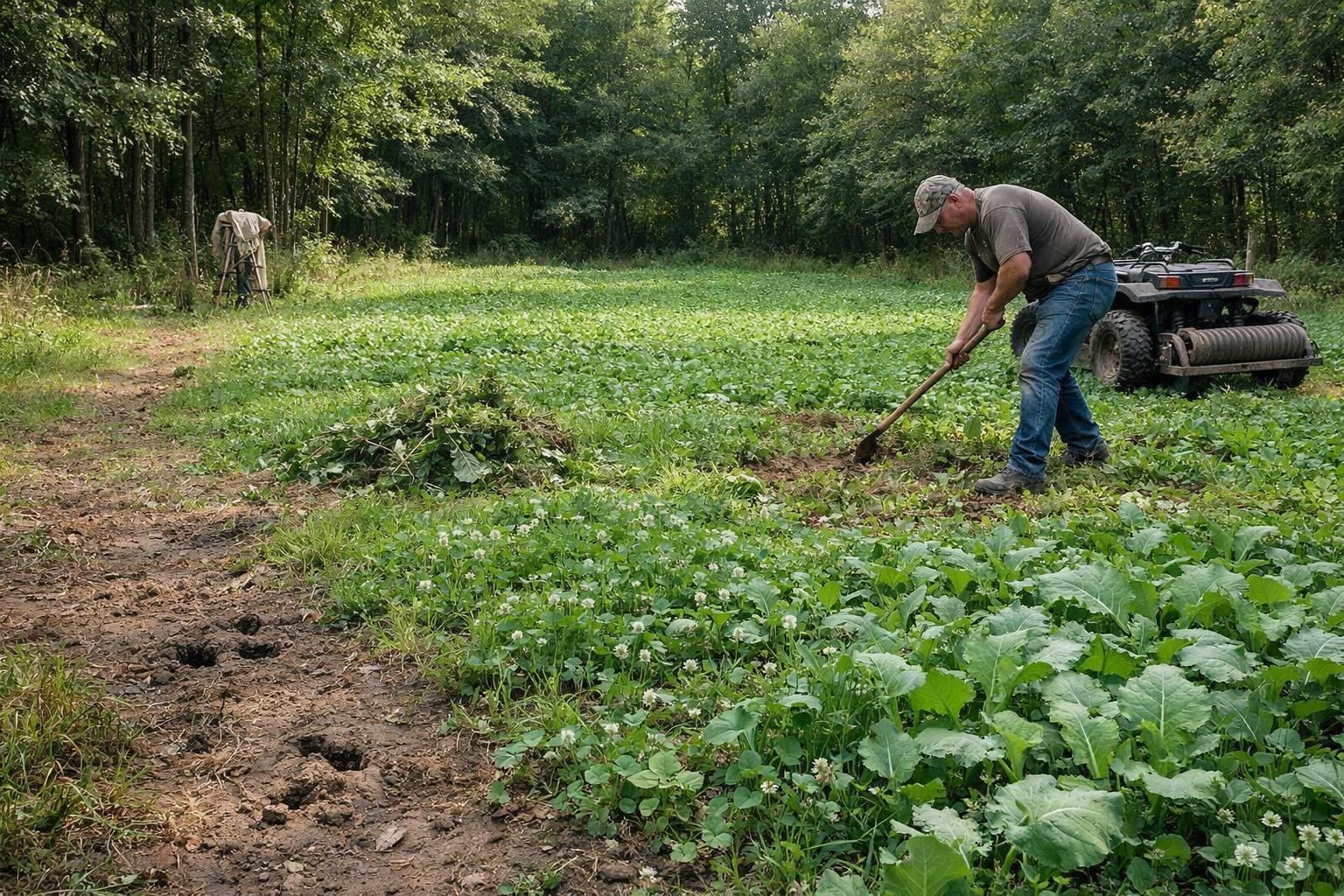
If your food plot looks more like a weed patch than a deer magnet six weeks after planting, you're not alone. Weeds are the single most common reason small-acreage food plots underperform. The instinct is to spray, but herbicide costs add up fast on tight budgets, and small plot sizes make hand and mechanical methods genuinely viable. This guide walks through a complete weed management approach — from soil prep through the growing season — that keeps your plot productive without chemical inputs.
Step 1: Start With a Soil Test and Proper pH
Weeds thrive in the same conditions that stress your food plot crops: low pH, compacted soil, and nutrient imbalances. Before spending time on weed control, address the root cause.
Send a soil sample to your county extension office or a private lab. Results typically cost $10–$20 and return in one to two weeks. The most critical number for food plots is pH. Most popular food plot species — clover, brassicas, winter wheat, chicory — perform best between 6.0 and 7.0. Below 6.0, these crops struggle and weeds like plantain, sorrel, and bedstraw take over because they tolerate acidic conditions your desired plants cannot.
Lime is your first weed control tool. Apply agricultural lime at the rate your soil test recommends — typically 1 to 3 tons per acre on established plots — six months before planting if possible. Lime raises pH slowly, so earlier is always better. On plots under one acre, a 50-pound bag spreader handles the job. One bag of pelletized lime covers roughly 1,000 square feet at standard rates.
Fertilizing to recommended levels (usually 300–400 pounds of 19-19-19 per acre, adjusted per test) gives your crop plants the resources to establish quickly and crowd out weeds through canopy competition.
Step 2: Mechanical Weed Control Before Planting
The most effective weed management happens before your seeds go in the ground. A few mechanical passes destroy the first flush of weed seedlings when they're most vulnerable.
Tillage and the stale seedbed method. Till or disk your plot four to six weeks before your target planting date. This breaks the soil surface, exposes buried weed seeds to light, and encourages them to germinate. Wait two to three weeks while the first weed flush emerges. Then make a shallow pass — no deeper than 2 inches — with a disk, drag, or tine weeder to kill those seedlings without bringing up a fresh batch of buried seeds from deeper in the soil. Plant immediately after this second pass to get your crop established before the next weed wave.
Mowing: On established perennial plots (clover, chicory), mowing at 6 to 8 inches removes weed seed heads before they mature and drop. Set your mower high enough to leave your desirable plants intact. Mow every three to four weeks during the peak weed growth period in spring and early summer. A standard lawn tractor handles plots up to two acres efficiently.
Hand-pulling: Labor-intensive but highly effective on plots under half an acre. Broadleaf weeds like thistles, ragweed, and pigweed pull cleanly when the soil is moist. Focus on eliminating weeds before they flower. A single thistle plant can drop 3,000 to 5,000 seeds — removing it before flowering prevents years of future work.
Step 3: Species Selection That Out-Competes Weeds
Choosing the right plants for your conditions dramatically reduces weed pressure because vigorous crop plants shade out weed seedlings before they establish.
Crimson clover and red clover are among the most aggressive cover crops for weed suppression. Their dense canopy closes quickly after establishment, shading out most annual weeds by midsummer. Both are excellent deer attractants and fix nitrogen, improving soil for future plantings.
Winter rye planted in fall is extremely competitive. Its rapid fall germination and dense root system crowd out most winter annual weeds. It works well as a cover crop or hunting season food source and establishes quickly even in marginal seedbeds.
Brassicas (turnips, radishes, kale) germinate so quickly — three to five days in warm soil — that they get a head start on most weeds. Their canopy closes within four weeks, suppressing the majority of warm-season weeds. Plant at 5 to 8 pounds per acre in late summer for fall plots.
What to avoid if weeds are your problem: Small grains like wheat and oats are productive but slow to establish, giving annual weeds a window to compete. If weed pressure is high, favor faster-germinating species for the first one to two seasons until you build better seedbed control.
Step 4: Timing Plantings to Outrun Weed Pressure
Most annual weed seeds germinate in a narrow window — late spring for summer annuals, early fall for winter annuals. Planting your food plot crops just before this window puts your desired plants a week or two ahead of the weed flush, which is often enough for them to establish canopy dominance.
For fall plots in the upper Midwest and Northeast, planting brassicas and clovers between August 1 and August 20 catches soil temperatures above 60°F (required for fast germination) before ragweed and lamb's quarters begin their fall flush. By the time those weeds are pushing up, your brassicas are already 4 to 6 inches tall.
For spring plots, wait until soil temperatures consistently reach 55°F before planting clover. Early cold-soil planting leads to slow germination and a long window for weeds to get established.
Monitor a cheap soil thermometer at 2-inch depth for five consecutive days before planting. This single habit prevents the most common timing mistake small-plot managers make.
Step 5: Managing Established Weed Populations Mid-Season
Even with good soil prep and timing, weeds will appear mid-season. Here's how to manage them without herbicides once your crop is growing.
Mowing height management: For clover and chicory plots, mow to 6 to 8 inches whenever weeds (especially grasses) get taller than your desirable plants. Clover and chicory are tolerant of mowing; most annual weeds are not. Three to four mowings between May and August keeps most weeds below the competitive threshold.
Overseeding into thin spots: Bare patches in your plot are weed incubators. Keep a small amount of your original seed mix on hand and overseed thin areas immediately after rain in spring or late summer. A hand-crank spreader works fine for patches under 5,000 square feet.
Strategic smothering: For a heavily weed-dominated plot that hasn't responded to mowing, consider a brown kill using cardboard or black plastic sheeting laid directly on the plot surface for four to six weeks during summer heat. This terminates existing weeds through heat and light exclusion without tilling. Remove the material in late summer and plant a fall mix directly into the killed sod. No tillage required.
Step 6: Building a Rotation Plan for Long-Term Weed Reduction
Single-crop, single-season food plots build up site-specific weed populations over time. Rotating plant families year-to-year disrupts the weed cycle because different crops compete differently, grow at different heights, and benefit from different mowing and timing strategies.
A simple three-year rotation for small food plots:
- Year 1: Brassica blend (fast-canopy weed suppression, fall hunting season draw)
- Year 2: Winter rye followed by summer clover (rye smothers winter weeds, clover fixes nitrogen)
- Year 3: Chicory or perennial clover (dense canopy, long-lived, few management passes needed)
Rotating also prevents soil nutrient depletion that occurs when the same crop family pulls the same nutrients year after year, keeping your plot productive without heavy synthetic fertilizer inputs.
Key Takeaways
- Soil pH correction with lime is the single most impactful weed control step — weeds dominate plots where crops struggle, and most food plot crops need pH 6.0–7.0.
- The stale seedbed method (till, wait for weed flush, shallow cultivate, then plant) removes the first weed generation before your crop goes in.
- Fast-establishing species like brassicas, crimson clover, and winter rye suppress weeds through canopy competition without any herbicide.
- Mow to 6–8 inches every three to four weeks during peak growth season to prevent annual weeds from setting seed on established perennial plots.
- Overseed bare spots immediately — empty ground is always occupied by weeds within two to three weeks.
- A three-year rotation plan disrupts weed cycles and builds soil health over time, reducing weed pressure each successive season.
Stop Seeing Deer Only at 2 AM — Get the Free 10-Point Habitat Fix
Your property has specific, fixable gaps — and most 1–50 acre hunters never find them. This free checklist pinpoints exactly what's missing and tells you what to change first so deer start showing up when you can actually hunt them.
- ✓ The food plot timing that pulls deer into daylight hours
- ✓ How to build bedding cover with just a chainsaw (no equipment needed)
- ✓ Stand placement mistakes silently blowing out your property
- ✓ The #1 pressure rule most hunters skip — and deer remember
- ✓ Low-pressure access routes most small acreage owners never plan