Timber Stand Improvement: A Practical Guide to Better Deer Habitat and Higher Land Value
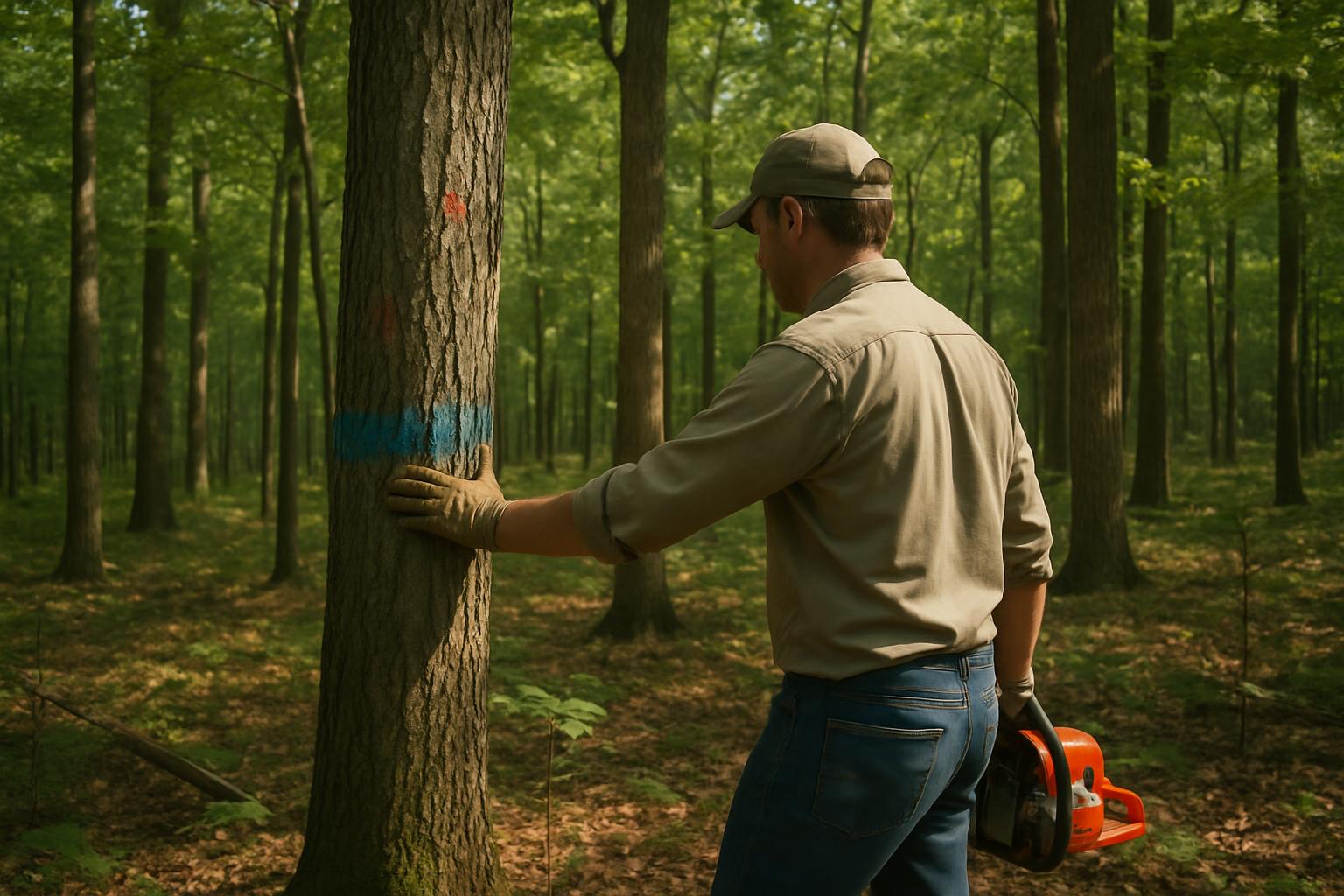
What Timber Stand Improvement Actually Is
If you own a woodlot, you already have one of the best land improvement tools available: your own trees. Timber stand improvement, or TSI, is the practice of selectively removing low-value trees and competing vegetation to give your best trees more room to grow.
The result is a healthier, more productive timber stand that also becomes far better wildlife habitat.
This is not complicated work. It does not require heavy equipment or a big budget. A chainsaw, a hatchet, and a few weekends can make a measurable difference on most properties.
Why Closed Canopy Timber Is a Food Desert for Deer
Mature, unmanaged timber looks impressive, but for deer it offers very little. A thick canopy blocks sunlight, which means almost nothing grows on the forest floor. No browse, no forbs, no soft mast. Deer will pass through, but they will not stay.
When you remove the canopy in strategic places, even partially, sunlight hits the ground and triggers a flush of growth. Native grasses, briars, young saplings, and forbs come up thick. Deer use these areas heavily, especially during spring and summer when does are nursing fawns and need high-quality forage close to cover.
The principle is straightforward: more light reaching the ground means more food, and more food means more deer using your property.
Which Trees to Target First
Not every tree in your woodlot is worth keeping. TSI starts by identifying the weed trees — species that compete aggressively for sunlight and nutrients but produce little value for timber or wildlife. Many of these mid-canopy trees make ideal candidates for hinge cutting — rather than felling them completely, you can convert them into immediate bedding cover and browse while their root systems stay alive.
Common targets vary by region, but they typically include trees that are heavily forked or crooked, diseased or dying trees of any species that are pulling resources from healthy neighbors, and low-value species that are crowding out high-value oaks, hickories, or other mast producers.
Your county's USDA Natural Resources Conservation Service office can help you identify which species in your specific area are candidates for removal. Many NRCS offices also offer cost-share programs that reimburse 50 to 75 percent of your TSI costs. It is worth making a call before you spend a dollar.
The Hack-and-Squirt Method
Cutting every unwanted tree by hand is labor-intensive. For trees you want to kill but leave standing, the hack-and-squirt method is faster and causes less disturbance.
You make a series of cuts around the base of the tree with a hatchet, angling downward into the cambium, and immediately apply a herbicide such as triclopyr into each fresh cut. The tree dies standing over the following weeks.
Left standing, these dead trees become snags. Snags attract woodpeckers and cavity-nesting birds. They break down slowly and feed the soil. Leaving some standing dead timber is not neglect — it is a deliberate habitat decision that adds structural diversity to your property.
Creating Edges and Openings
The most productive wildlife habitat exists at edges — the transition zones between thick cover and open areas. TSI can be used to create these edges deliberately throughout your timber.
Aim for small openings of a quarter to a half acre scattered through your woodlot. These do not need to be cleared completely. A partial thinning that gets light to the forest floor is enough.
These openings will naturalize on their own, filling in with native vegetation that deer, turkey, and small game will use year-round. Understanding how deer select bedding sites within these openings lets you position your TSI work to create the specific combination of cover, escape routes, and wind advantage that keeps deer on your property. You can also plant them as food plots if you want a more managed approach. Either way, the structure you are building — thick timber surrounding open pockets with dense early growth — is close to ideal habitat.
The Financial Case for TSI
Beyond wildlife, TSI has a direct financial return on timber value.
When you remove competition, your best trees grow faster. A red oak that might take 80 years to reach sawlog size in a crowded stand can reach it in 50 to 60 years with proper spacing and light. The tree also tends to develop a cleaner trunk with fewer defects, which increases its value at harvest.
If you are managing for timber income, TSI is not optional — it is the primary management activity between planting and harvest. A stand that has been properly thinned produces timber of significantly higher quality and value than a neglected one.
Consider talking to a consulting forester before you start. Many work on a percentage of timber sale proceeds and can walk your property at low cost. They can identify which areas to prioritize, which trees to release, and whether any timber is ready for a light harvest that could fund further improvement work.
How to Get Started Without Getting Overwhelmed
Do not try to fix the whole property at once. Start with one area — five to ten acres — and work it consistently over two or three seasons.
Walk it first. Mark the trees you want to keep with flagging tape or paint. Everything unmarked is a candidate for removal.
Work from the top of the canopy down. Cut the trees competing with your best timber trees first, then address the mid-story. Always plan your cuts, watch where trees will fall, and keep a clear escape route. Building a firebreak along your working perimeter — covered in How to Establish a Firebreak on Rural Property — gives you a containment line if you ever want to prescribe burn the newly opened stand.
Then wait. Come back the following spring and watch what grows. That firsthand observation will teach you more than any guide.
What to Expect Over Time
The first spring after a TSI treatment can look rough. New growth comes in thick and weedy. That is a good sign.
By year two or three, the vegetation settles into something more structured. The trees you released put on visible growth. Established browse plants fill the openings. Deer trails start appearing through the new cover.
After five years, you will have a noticeably different property — one that holds more deer, supports turkey, grows more valuable timber, and continues to improve as long as you stay with it.
TSI is slow work with a long payoff. That is exactly what makes it a real land improvement rather than a quick fix.
Stop Seeing Deer Only at 2 AM — Get the Free 10-Point Habitat Fix
Your property has specific, fixable gaps — and most 1–50 acre hunters never find them. This free checklist pinpoints exactly what's missing and tells you what to change first so deer start showing up when you can actually hunt them.
- ✓ The food plot timing that pulls deer into daylight hours
- ✓ How to build bedding cover with just a chainsaw (no equipment needed)
- ✓ Stand placement mistakes silently blowing out your property
- ✓ The #1 pressure rule most hunters skip — and deer remember
- ✓ Low-pressure access routes most small acreage owners never plan