Fence Line Management: Cut Maintenance Costs and Build Better Habitat
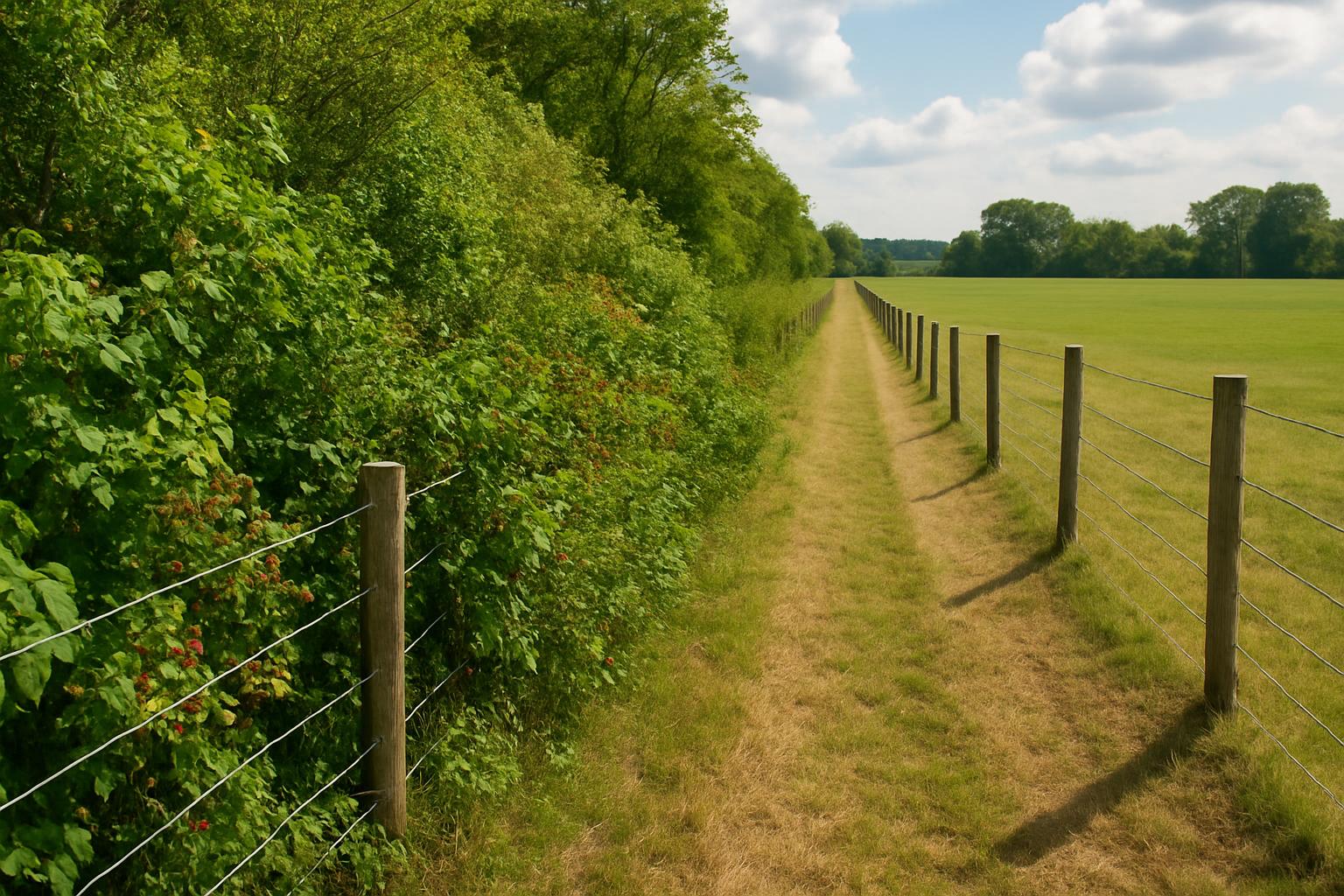
Most landowners inherit fence lines they didn't design and maintain them the way their predecessors did—reactively. You fix a post when it leans, clear brush when the line gets buried, and hope the wire holds through another season. That approach works until it doesn't, and by the time a fence line becomes a serious problem, you've already burned through significant time and money.
There's a better way to think about fence lines: not as boundary markers that need occasional firefighting, but as managed strips that can either work against you or work for you. Done right, they reduce annual labor, extend the life of your infrastructure, and—if you want them to—provide real habitat value and travel corridors across your property.
This is a practical guide for any landowner, whether you're running livestock on 300 acres or managing a 50-acre tract for hunting and recreation.
What's Actually Happening Along Your Fence Lines
The biggest threat to a fence line isn't weather or livestock pressure—it's woody encroachment. Eastern red cedar, honey locust, osage orange, multiflora rose, and autumn olive are the usual suspects depending on your region. Left unchecked, these species shade out the fence base, push posts out of alignment, and trap moisture against wood and steel.
On a typical Midwest or Mid-South property, a fence line that goes unmanaged for five to seven years can require a full day of chainsaw and brush-hog work per quarter-mile section for the initial clearing. That same section, maintained on a two-year cycle, takes half a day or less.
Walk your fence lines in late fall or early winter when vegetation is down. Note sections with heavy woody growth, posts that are leaning or rotted, and spots where the ground under the fence has eroded or heaved. Take photos. A half-day inventory gives you the information to build a real maintenance plan instead of guessing year to year.
Decide What to Keep and What to Remove
Not everything growing along a fence line needs to go. That's a common mistake. Landowners clear fence lines down to bare dirt, which creates a maintenance treadmill. Bare soil invites aggressive weeds, causes erosion, and provides nothing to wildlife or pollinators.
The goal is selective management. Remove anything that directly threatens fence structure—woody plants with trunks larger than two inches in diameter within a foot of the wire, species with aggressive root systems that heave posts, and dense shrub thickets that trap debris and moisture against the fence base.
Keep or encourage low-growing, non-aggressive species: native grasses, wildflowers, and low shrubs like wild plum or dogwood positioned six to eight feet back from the fence itself. These provide cover and food for quail, rabbits, and pollinators without threatening your infrastructure.
On fence lines bordering row crops or hay fields, a managed buffer of native warm-season grasses—big bluestem, indiangrass, or switchgrass—set back from the fence acts as a filter strip, reduces erosion, and gives ground-nesting birds a place to work.
Mechanical Clearing: When and How
For heavily encroached fence lines, the first step is usually mechanical work—chainsaw on larger stems, followed by a brush hog or skid steer with a mulching head for the rest.
Do this in late winter, after the ground firms up but before spring green-up. Cutting woody species before bud break reduces regrowth vigor compared to summer cutting. For persistent species like eastern red cedar or honey locust, treat cut stumps with a basal bark or stump-treatment herbicide immediately after cutting. Waiting even 30 minutes reduces effectiveness significantly.
A 36-inch brush hog on a 40 to 45 horsepower tractor handles most fence line work on flat to moderate terrain. For steep banks or tight spaces, a handheld brushcutter with a blade attachment is more practical. Budget two to three hours of tractor time per half-mile of moderately encroached fence line for the initial clearing pass.
Herbicide Management for Long-Term Control
Mechanical clearing without follow-up herbicide work is temporary relief. Most woody species resprout aggressively from the root crown after cutting.
For broadcast management along fence lines, a selective grass-safe herbicide like triclopyr amine—or a triclopyr and clopyralid blend—applied in late summer or early fall targets broadleaf woody species while leaving desirable grasses intact. Spot treatment with a backpack sprayer works well for scattered regrowth between clearing cycles.
Always follow label directions and calibrate your sprayer before each season. Overapplication wastes money and damages desirable vegetation; underapplication means retreatment. If you're establishing or maintaining a native grass buffer, avoid glyphosate—it will take out your grasses. Use selective herbicides matched to the vegetation you're trying to keep.
Fence Lines as Habitat Corridors
If your property includes any combination of timber, open fields, wetlands, or brushy cover, your fence lines are potential travel corridors for deer, turkey, quail, rabbits, and small mammals. A well-managed fence line running between two habitat types—say, a woodlot edge and a native grass field—connects those habitats and increases their combined value.
The key elements of a productive corridor are: continuous low cover from native grasses or low shrubs, occasional mast-producing or berry-producing shrubs like persimmon, wild plum, elderberry, or hawthorn, and minimal disturbance. A corridor doesn't need to be wide—a strip 15 to 20 feet on each side of the fence provides meaningful cover for most species. Pairing your fence line corridor with hinge cutting in adjacent timber builds layered bedding structure alongside your travel corridor faster than either approach alone.
On one 180-acre property in central Tennessee, a landowner converted four fence lines running between hardwood timber and fallow fields into managed native grass corridors over three years. Quail, which had been absent for years, returned within two seasons. Those same corridors now serve as primary travel routes for deer moving between bedding and feeding areas throughout the year.
A Practical Maintenance Schedule
A sustainable fence line program doesn't require a lot of time—it requires consistency. Here's a working schedule for most properties.
Year one: Conduct a full inventory. Complete initial mechanical clearing on priority sections—those adjacent to critical infrastructure, water crossings, or heavily used pastures. Apply stump treatments to all cut woody stems.
Year two: Follow up with herbicide treatment on regrowth from year one clearing. Begin establishing native grasses or other desired vegetation in cleared sections. Inspect and repair fence infrastructure while access is clear.
Ongoing: Mow or spot-spray fence line sections on a two to three year rotation depending on site conditions. Conduct an annual walk-through inspection each fall. Repair fence infrastructure as needed.
The rotation approach means you're never trying to tackle the whole property at once. Divide your total fence line into thirds or quarters and work through each section on a rolling schedule. By the time you cycle back to the first section, it's ready for another light pass rather than a full-scale reclamation job.
Final Thought
Fence lines are a fixed feature of most land operations, but how you manage them is entirely within your control. The landowners who get the most out of their properties treat fence lines as managed assets, not just boundaries to patch when something breaks. Consistent mechanical clearing, selective herbicide work, and thoughtful vegetation management pays back in reduced labor costs, extended fence life, and habitat that supports the wildlife you want on your land.
Start with an inventory. Walk your lines this fall, take notes, and pick one section to tackle this winter. That's how every well-managed property got that way—one section at a time.
Stop Seeing Deer Only at 2 AM — Get the Free 10-Point Habitat Fix
Your property has specific, fixable gaps — and most 1–50 acre hunters never find them. This free checklist pinpoints exactly what's missing and tells you what to change first so deer start showing up when you can actually hunt them.
- ✓ The food plot timing that pulls deer into daylight hours
- ✓ How to build bedding cover with just a chainsaw (no equipment needed)
- ✓ Stand placement mistakes silently blowing out your property
- ✓ The #1 pressure rule most hunters skip — and deer remember
- ✓ Low-pressure access routes most small acreage owners never plan