How to Use Native Warm-Season Grasses for Deer Bedding Cover on Small Acreage
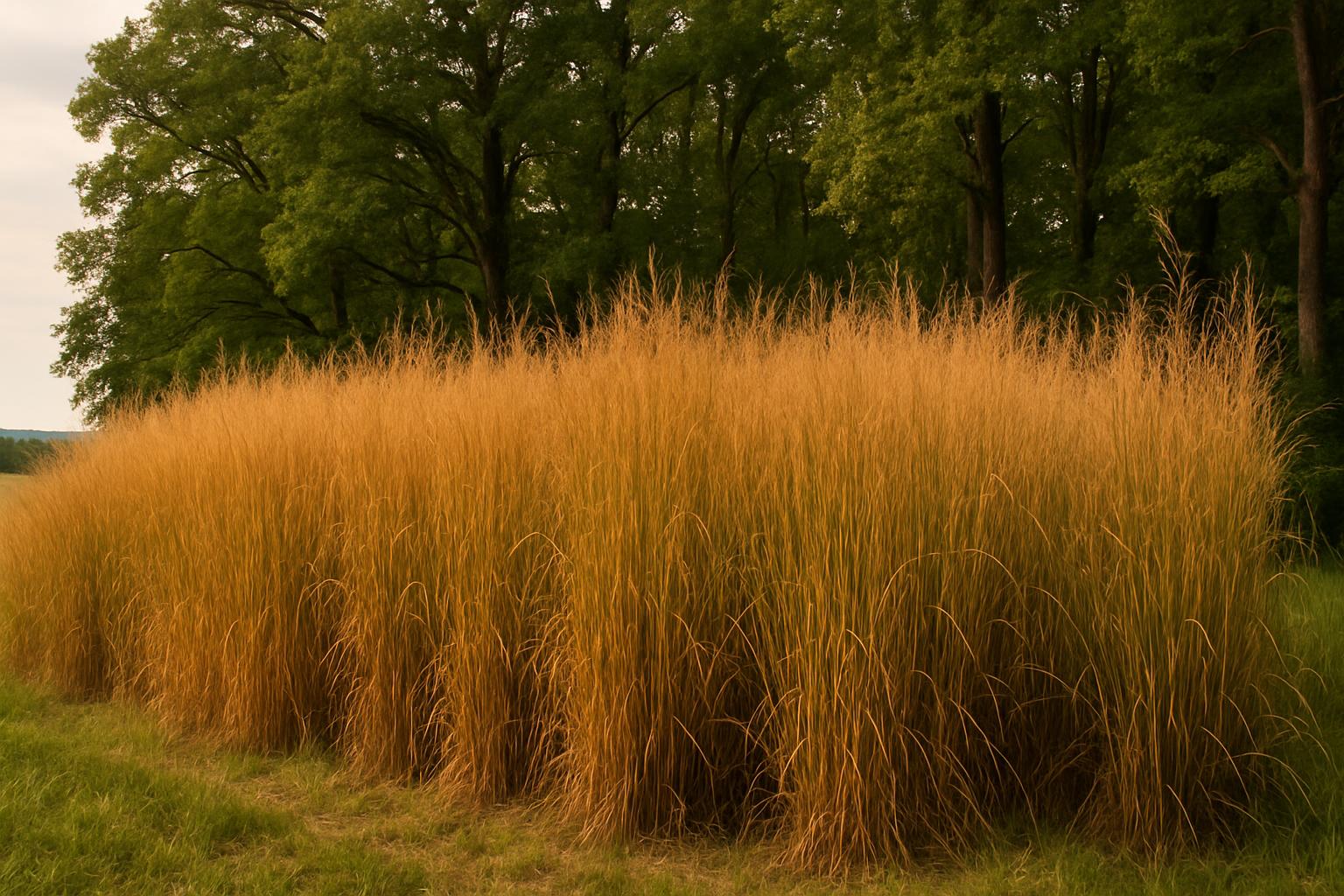
If you're managing deer on 5 to 50 acres, the difference between deer bedding on your property or your neighbor's often comes down to one thing: thermal and security cover. Native warm-season grasses like switchgrass and big bluestem are among the most effective—and most overlooked—tools for creating the thick, tall bedding cover that keeps deer on your land through hunting season and beyond.
This guide focuses specifically on using native warm-season grasses (NWSG) as deer bedding cover on small acreage. Unlike general establishment articles, this is about placement strategy, species selection, layout decisions, and management choices that make your NWSG plantings function as true bedding areas—places deer return to day after day instead of spots they pass through once.
Why Native Warm-Season Grasses Make the Best Deer Bedding Cover
Deer bed in areas that give them two things: thermal protection and 360-degree awareness of approaching threats. Native warm-season grasses deliver both.
Switchgrass, in particular, holds its structure through winter. A mature stand at 5 to 8 feet retains most of its stems and seed heads through January and February, providing wind protection and visual screening even after hardwood trees drop their leaves. This matters most in November and December—peak hunting pressure months—when leaf-off strips cover from woodlots and field edges.
Big bluestem and indiangrass provide similar height and can be mixed with switchgrass to diversify structure. The varied heights and stem densities create micro-pockets within a larger stand where deer feel secure enough to bed during daylight hours.
Compare NWSG to other bedding cover options:
- Hinge-cut timber: Creates immediate cover but requires standing timber and chainsaw work. Hinge cutting is excellent as a complement to NWSG, not a replacement.
- Native shrub plantings: Dogwood and hazelnut grow slowly and require 3–5 years before providing meaningful cover.
- Cedar thickets: Permanent once established but difficult to manage and consume acreage you need for food plots.
NWSG reaches functional maturity in 2–3 years, provides visual screening within the first growing season, and can be burned or mowed to reset if management needs change.
Where to Plant on Your Property
Placement is the most important decision in a NWSG bedding planting. A well-placed 1-acre stand of switchgrass will hold more deer than a poorly placed 5-acre planting.
Best locations for small acreage:
- South- or southwest-facing slopes: Deer prefer to bed where thermal cover (warm air pooling below) meets wind advantage (air rising past their bedded position carries scent uphill and away). On small acreage, these are usually south-facing hillsides above a creek bottom or hollow.
- Between food and timber: A NWSG planting situated between a food plot and a woodlot creates a staging area where deer wait until dark before moving to food. Position stands 80–150 yards from your food plot.
- Field edges and old field transitions: Abandoned fields or field corners that adjoin timber are already deer magnets. NWSG gives deer a reason to stop and stay rather than pass through.
- Inside corners of fence lines: These naturally funnel deer movement. A half-acre NWSG planting in an inside corner where two fence lines meet creates a bedding hub that concentrates deer movement through predictable corridors.
For properties under 20 acres, plant NWSG in strips rather than blocks. A strip 30–50 yards wide and 100–200 yards long paralleling a woodlot edge maximizes edge effect per acre planted. Deer enter and exit from multiple points along the strip, which prevents the area from feeling like a trap to a mature buck.
For properties 20 acres and larger, two 1- to 3-acre blocks positioned 100–200 yards apart gives you multiple staging areas and lets you hunt different wind directions without compromising your primary bedding cover.
For a deeper look at how deer use cover on small properties, see Understanding Deer Bedding Areas on Small Acreage.
Best Grass Species for Deer Bedding
Not all native warm-season grasses perform equally as bedding cover. Focus on these three:
Switchgrass (Panicum virgatum) is the top species for deer bedding. Choose upland varieties like Cave-in-Rock or Kanlow for most properties. Switchgrass grows 5–8 feet tall, produces dense stem structure that holds through winter, and tolerates a wide range of soil types. Seed at 6–8 pounds pure live seed (PLS) per acre in monoculture or 4–5 pounds PLS per acre in a mix.
Big Bluestem (Andropogon gerardii) is best in combination with switchgrass. Big bluestem produces open-bottomed structure that deer can move through while remaining visually screened from outside the stand. Seed at 3–4 pounds PLS per acre in a mix.
Indiangrass (Sorghastrum nutans) adds structural diversity and fills gaps between switchgrass clumps. Slightly shorter at 4–5 feet. Seed at 2–3 pounds PLS per acre in a three-species mix.
Avoid eastern gamagrass for deer bedding—it stays shorter at 3–4 feet and opens up too much in winter. Little bluestem is better suited for pollinator habitat than thick bedding cover.
A practical mix for 1 acre: 5 lbs switchgrass PLS + 3 lbs big bluestem PLS + 2 lbs indiangrass PLS = 10 lbs PLS total per acre. Expect to spend $100–$160 in seed for a 1-acre planting at current certified seed prices.
Establishment Timeline: What to Expect Year by Year
Year 1 — Seeding Year
Kill existing vegetation the fall before or early spring with two applications of glyphosate at 1 quart per acre, 30 days apart, targeting actively growing plants. Firm the seedbed with a cultipacker before drilling. Drill seed at 1/4 inch depth or shallower using a grain drill with a grass seed box. Broadcast seeding works but requires 25% more seed and a firming pass after broadcast.
Soil temperature at planting should be at least 55°F—typically late May through mid-June across most of the Midwest and South.
Summer of Year 1
NWSG seedlings are small and slow in their first year. Weeds will outpace them. This is normal—root development is happening underground. Mow at 18–20 inches whenever weeds reach that height. Never mow below 12 inches during establishment; you're removing weed tops, not managing the grass.
Fall of Year 1
Seedlings should be 8–18 inches tall and well-rooted. Some stands look thin at this stage—that's acceptable. The stand is establishing below ground. Resist spraying broadleaf herbicides unless weeds are overwhelming; Plateau (imazapic) at 6–8 oz per acre can be applied in fall of Year 1 if needed, with a non-ionic surfactant at 0.25% v/v.
Year 2
Burn the stand in late March or early April when daytime temperatures are in the 50s and relative humidity is 30–50%. Burning removes thatch, stimulates NWSG growth, and sets back cool-season weeds. If burning isn't an option, mow to 6–8 inches. Stand density increases significantly through summer; most stands reach full grass cover by July of Year 2.
Year 3 and Beyond
Full maturity. Switchgrass at 5–8 feet provides dense standing cover from September through the following spring. Burn or mow every 2–3 years to prevent thatch buildup and maintain stand density. Stands that go 5+ years without burning become choked with dead material and gradually thin out as light is excluded from the base.
First-Year Weed Control That Actually Works
Weed competition in Year 1 is the primary reason NWSG plantings fail on small acreage. Here's what works:
Pre-plant double burndown: Apply glyphosate at 1 qt/acre twice—once in early April and again in mid-May—before drilling in late May or early June. This eliminates the existing seedbank. A single application often leaves enough residual tall fescue or other cool-season grasses to dominate your NWSG stand in Year 1.
Mowing threshold: Mow when weeds reach 24 inches, cutting down to 20 inches. A rotary mower or bush hog works fine. Check every 2–3 weeks in June and July. Most stands need 2–3 mowings during the first summer.
Post-emergence herbicide option: Plateau (imazapic) at 6–8 oz per acre can be applied over established NWSG once the grass has at least 3–5 tillers (side shoots from the main stem). This selectively controls many broadleaf weeds and annual grasses without harming established NWSG. Always add a non-ionic surfactant at 0.25% v/v.
For more on weed management in habitat plantings, see Managing Weeds in Small Food Plots Without Herbicides.
Screening Cover Along Travel Corridors
NWSG serves double duty as bedding cover in blocks and screening cover in strips along field edges and travel corridors. Most small acreage landowners plant NWSG exclusively in blocks and miss the screening cover opportunity entirely.
A 15- to 20-yard-wide strip of switchgrass along a food plot edge gives deer the confidence to enter the opening earlier in the evening. Mature bucks that won't cross an open field until after dark will regularly emerge into a food plot from behind a switchgrass screen while there's still shooting light.
Key placement for screening strips:
- Along the upwind side of food plots to block deer from winding your stand position
- Along access roads or walking trails to prevent deer from detecting human movement before you reach your stand
- Between bedding blocks and food sources to create a secure travel corridor connecting the two
Combine NWSG screening strips with your food plot layout. See How to Build a Food Plot That Deer Will Actually Use for layout guidance that integrates cover and feed on the same property.
Common Mistakes to Avoid
Planting too close to timber: NWSG needs at least 6 hours of direct sun per day. Planting within 30 yards of a mature timber canopy means the stand gets shaded by July, resulting in thin, open grass that doesn't function as cover. Keep NWSG in open areas with full sun exposure.
Skipping the double burndown: Established cool-season grasses like tall fescue require two glyphosate applications 30 days apart to achieve 90–95% kill. A single application isn't enough. Residual fescue will dominate your NWSG planting in Year 1 before the grasses can compete.
Mowing too short during establishment: Mowing below 10 inches damages NWSG seedlings. The only goal of establishment mowing is to remove the top growth of competing weeds—not to clean up the field or manage the grass to a tidy height.
Never burning: Stands that go 4–5 years without fire or mowing develop excessive thatch that shades out new base growth, gradually opening the stand and reducing its value as dense bedding cover. Burn every 2–3 years to maintain the stem density that deer require.
Expecting first-season results: NWSG is a 2–3 year investment. If you need bedding cover before the stand matures, pair your planting with hinge cuts nearby for immediate structure while the grass develops. More on pairing these techniques in Creating Bedding Areas That Hold Deer on Your Property Year-Round.
Key Takeaways
- Switchgrass is the most effective NWSG species for deer bedding cover, holding structure at 5–8 feet through winter when most other plants fail.
- Plant between food sources and timber, on south-facing slopes, and in field corners to maximize bedding use and deer movement predictability.
- Use 30- to 50-yard strips on properties under 20 acres; use 1- to 3-acre blocks on larger properties to create multiple staging areas.
- A two-application glyphosate burndown before seeding and mowing at 20 inches to manage weed competition are the two most critical Year 1 decisions.
- Expect two growing seasons before the stand provides meaningful bedding cover; use hinge cuts nearby to bridge the gap.
- Burn every 2–3 years to remove thatch and maintain the dense stem structure that makes NWSG valuable as bedding cover.
Stop Seeing Deer Only at 2 AM — Get the Free 10-Point Habitat Fix
Your property has specific, fixable gaps — and most 1–50 acre hunters never find them. This free checklist pinpoints exactly what's missing and tells you what to change first so deer start showing up when you can actually hunt them.
- ✓ The food plot timing that pulls deer into daylight hours
- ✓ How to build bedding cover with just a chainsaw (no equipment needed)
- ✓ Stand placement mistakes silently blowing out your property
- ✓ The #1 pressure rule most hunters skip — and deer remember
- ✓ Low-pressure access routes most small acreage owners never plan